Roles
Lead Product Designer
Timeline
October - December 2025
Team
1 PM
2 Engineers
1 Designer (me)
Tools Used
Figma
Claude
Cursor
ChatGPT
Mobbin
GitHub
Overview
SyncNest is a wellness super-app built around four pillars — mental reset, travel recovery, creative flow, and lifestyle alignment. The MVP focused on MindSync, the daily mental wellness module, where users check in on their mood, move through guided breathing sessions, and track their emotional rhythm.
Defining The Problem
Most people want to take care of their mental health. Existing apps make it feel like a chore.
The wellness app market is crowded but emotionally hollow. Designing SyncNest meant understanding exactly where and why people stop showing up.
Avoidance
Users skip their check-in because the app made them feel judged — not because they forgot.
Lack of Momentum
Existing apps track activity but don't make users feel their momentum between sessions.
No emotional context
Existing apps record what you did but ignore how you felt doing it.
the Guiding Question
How do you make showing up every day feel rewarding, not obligatory?
01
Make the daily mood check-in feel effortless, with low enough friction that opening the app takes minimal convincing
02
Design the Sync Score to build meaning over time, so consistency creates its own reward
03
Use streak tracking and session history to make progress visible without feeling like pressure
04
Build a system flexible enough to absorb three future modules without a redesign
Analyzing the Competitive Landscape
Existing Apps Track Wellness. Very Few Make You Want to Come Back Tomorrow.
Calm
Content-first
Excels at depth — sleep
stories, meditations, masterclasses. But built around passive consumption, not active habit formation.
There's no mechanism that rewards showing up consistently. Miss a week and the app doesn't notice.
Headspace
Streak-driven
Comes closest to daily ritual design with its streak system, but the streak becomes its own source of anxiety. Miss one day and the counter resets to zero — punishing the exact users who most need encouragement.
Missing: forgiveness mechanics
and positive reinforcement
Apple Health
Data-heavy
Aggregates everything but personalizes nothing. Surfaces data without interpretation, leaving users with charts they don't know how to act on and scores that don't suggest what to do next.
Missing: emotional context and
actionable guidance
THE GAP
Every existing app either demands too much consistency, punishes imperfection, or drowns users in data without emotional context. None of them are designed around the feeling of making progress — which is exactly what SyncNest was built to do.
AI-Powered Design Process
Using AI to Move Faster Without Losing the Work That Mattered
Throughout this project, I leveraged multiple different AI tools for specific, high-volume problems so design thinking could go where it was actually needed. AI handled volume and speed while the strategic decisions came from human design thinking.
Claude - UX Copy & Research
MindSync required a high volume of emotionally precise copy. I used Claude to generate first drafts across every touchpoint, then edited each piece against the brand voice and the emotional register of the screen it lived on.
Chat GPT - Design Ideation
Before committing to high-fidelity explorations, I used AI to pressure-test layout directions and UI pattern decisions. I'd describe the design problem and constraints, then use the output to stress-test my thinking before spending time in Figma.
Cursor/Github: Rapid Prototyping
For context flows where microanimations, gradient responses, and multi-state logic are hard to describe in a static Figma frame — I used Cursor to build a working interactive prototype and GitHub to version and share it with the project manager.
The Hard Call
Two Decisions That Defined the Whole Experience
These weren't visual problems. They were emotional ones, and getting them wrong would have undermined everything MindSync was built to do.
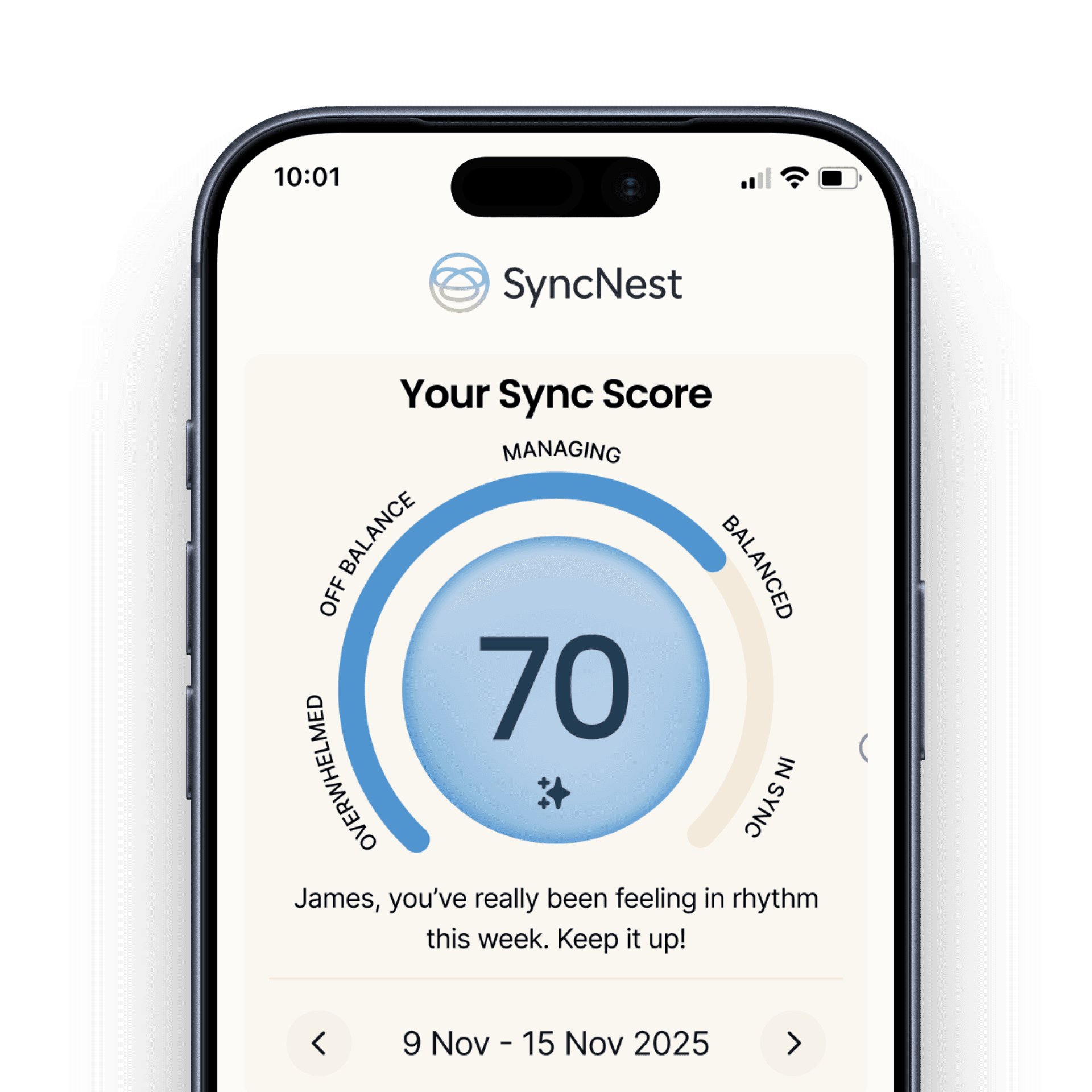
Making the Sync Score Feel Like a Reflection
The visualization wasn't the hard part — the copy around it was. Every sync state needed language that felt like a reflection, not a verdict. "You're maintaining steady rhythm" lands differently than "Score: 70.
Projected outcome: Positive emotional framing at key feedback moments is correlated with 20–30% higher day-7 retention in habit-based apps — the difference between a user who comes back and one who quietly churns.
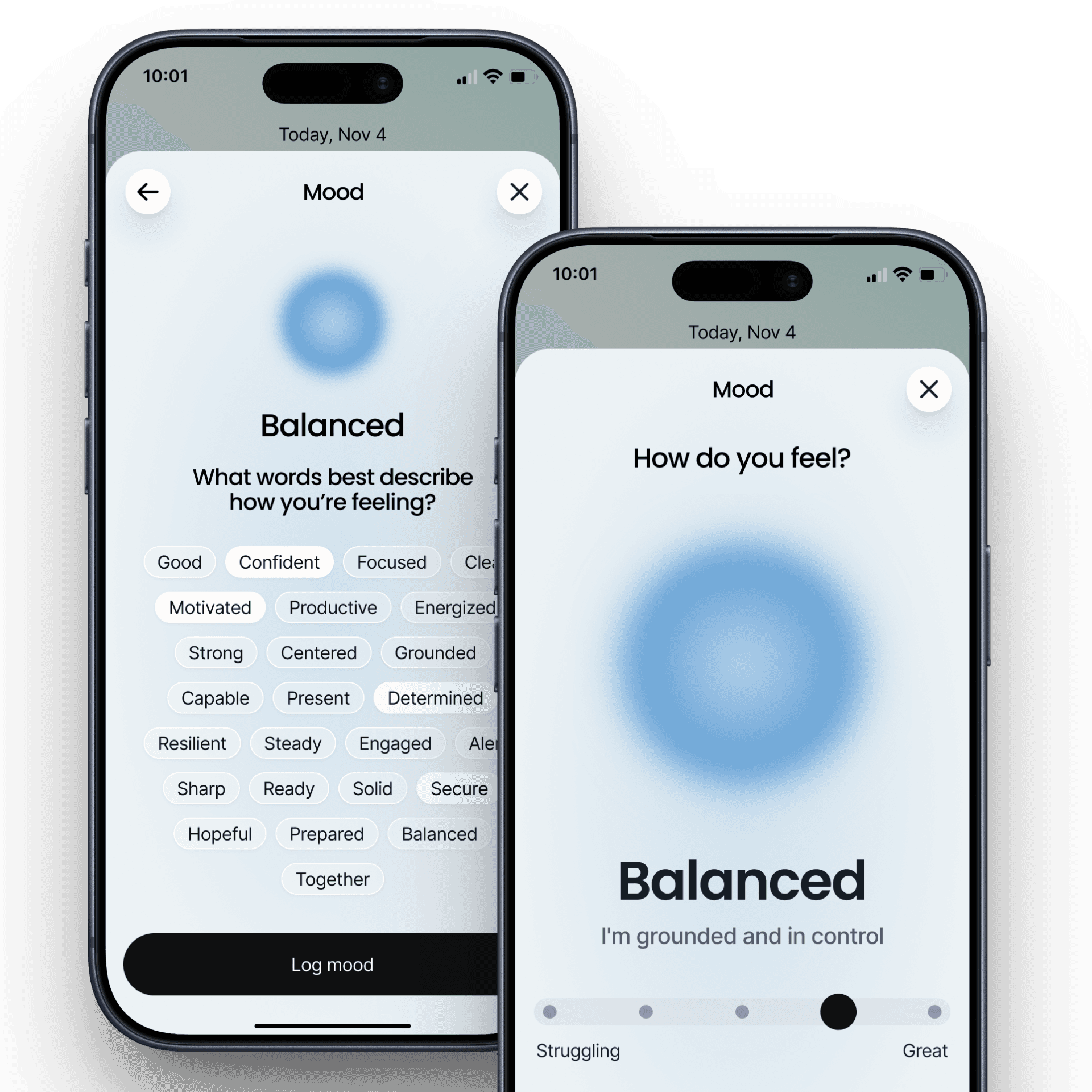
Designing a Check-In That Feels Like an Exciting Moment
If the check-in feels like a task, users close the app before the session starts. A gradient spectrum from Struggling to Great lets users express themselves in one gesture; with optional depth for those who want it, and zero obligation for those who don't.
Projected outcome: Reduced check-in time to under 10 seconds targets the primary drop-off point in wellness apps, where studies show up to 60% of users abandon sessions before completing their first interaction.
final solution
Introducing MindSync: A Wellness Ritual That Earns Its Place in Your Day
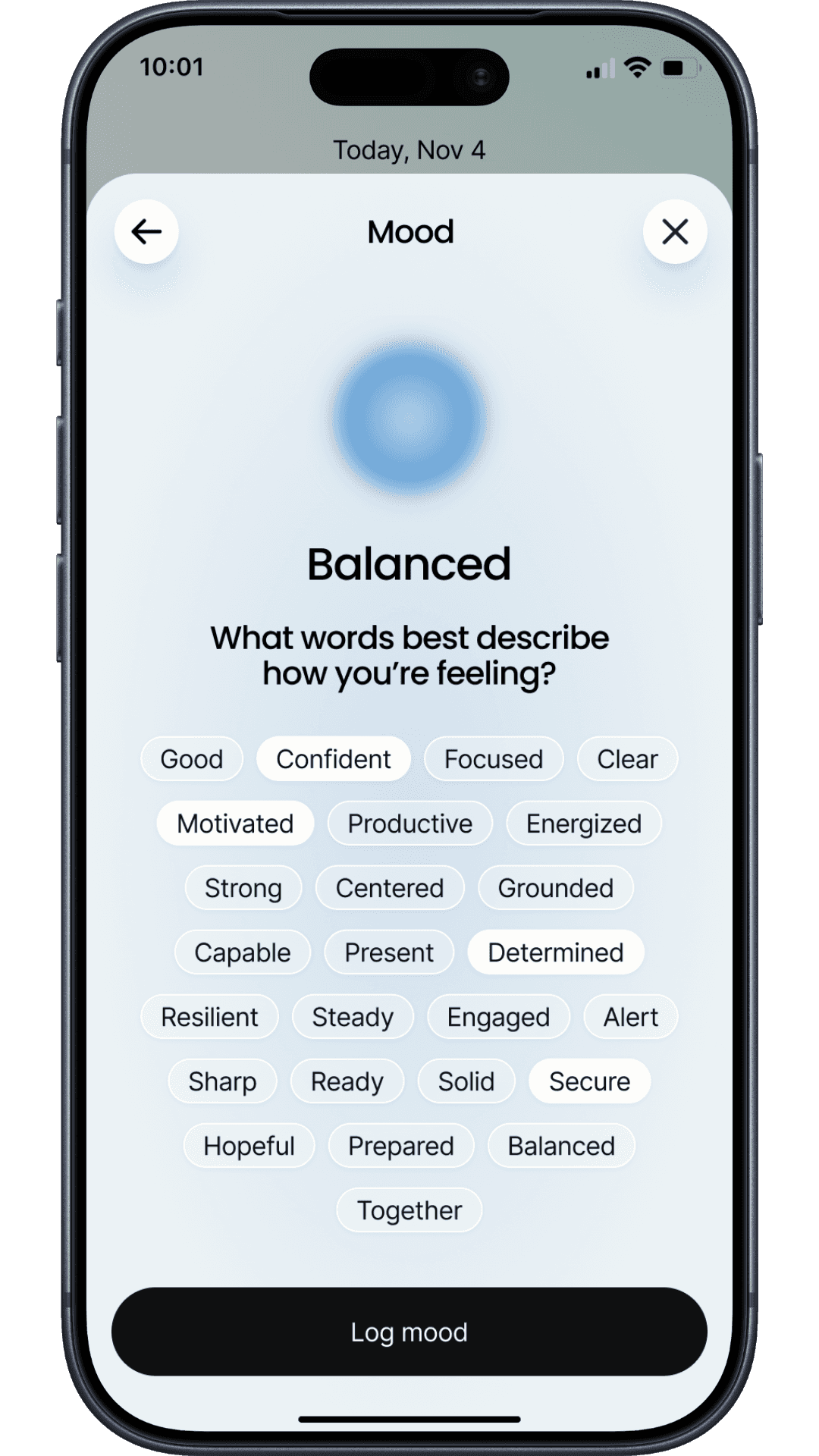
The Mood Check-In
The entry point to every session. Fast enough to complete in seconds, expressive enough to feel meaningful. Sets the emotional context for the session before it begins.
Breathing Sessions
Guided exercises in 1, 3, and 5-minute lengths. The copy took the most passes of any element — breathing guidance lives or dies on language, and landing the right register took real work.
The Sync Score
The retention engine. The Sync Score improves the more you show up by tracking mood patterns, session consistency, and emotional rhythm over time.
The SyncNest dashboard acts as the centralized hub that connects all of the modules together.
Shared Progress
Momentum compounds when someone else can feel it with you. Share your mood or Sync Score milestone with friends directly from the app — not as a performance, just as a pulse check.
The outcome & next steps
30+ Screens, 0→1 in 6 weeks
A complete MVP — Hub dashboard, full MindSync module, design system, and developer handoff in a fixed timeline
A system built to scale, not just ship
The token-based component library was architected to absorb TripSync, FlowNest, and LifeSync without a redesign. Future design work starts at 40% done, not from scratch.
Post-Launch Hypothesis
The metric I'd watch first:
Do users who receive their first Sync Score milestone return the next day at a higher rate than those who don't? That's the core retention hypothesis the design was built around, and the number that would tell us if it's working.
reflection
What I Learned
Copy is a design tool
The visuals came together faster than I expected. Getting the language around the Sync Score and breathing sessions to land in the right emotional register took more passes than any screen did.
Ask Sharper Questions
Complex products punish assumptions. SyncNest taught me that time spent clarifying upfront always costs less than redesigning later.
If I Could Run It Back
Validate Earlier
I leveraged AI and moved fast by trusting my instincts due to the lack of time we had, which held up fine— however instinct isn't a substitute for validation. I'd put designs in front of real users before finalizing key interactions like the mood check-in.