Slack

Reducing Friction in Everyday Conversations: Rethinking Slack’s Threads Experience

Context

Slack threads were designed to organize conversations but instead created friction. Users found threads too formal for quick replies, causing everyday conversations to become fragmented and important updates to get lost.

My Role

I owned the complete redesign of Slack's reply system— conducting user research, defining the strategy, and designing the new experience that balances casual conversation with focused discussion.

Platform

Web, Mobile

Roles

Design Lead

Skills

UX Strategy

Interaction Design

Interface Design

Interactive Prototyping

Duration

2 Weeks
What Are Threads?

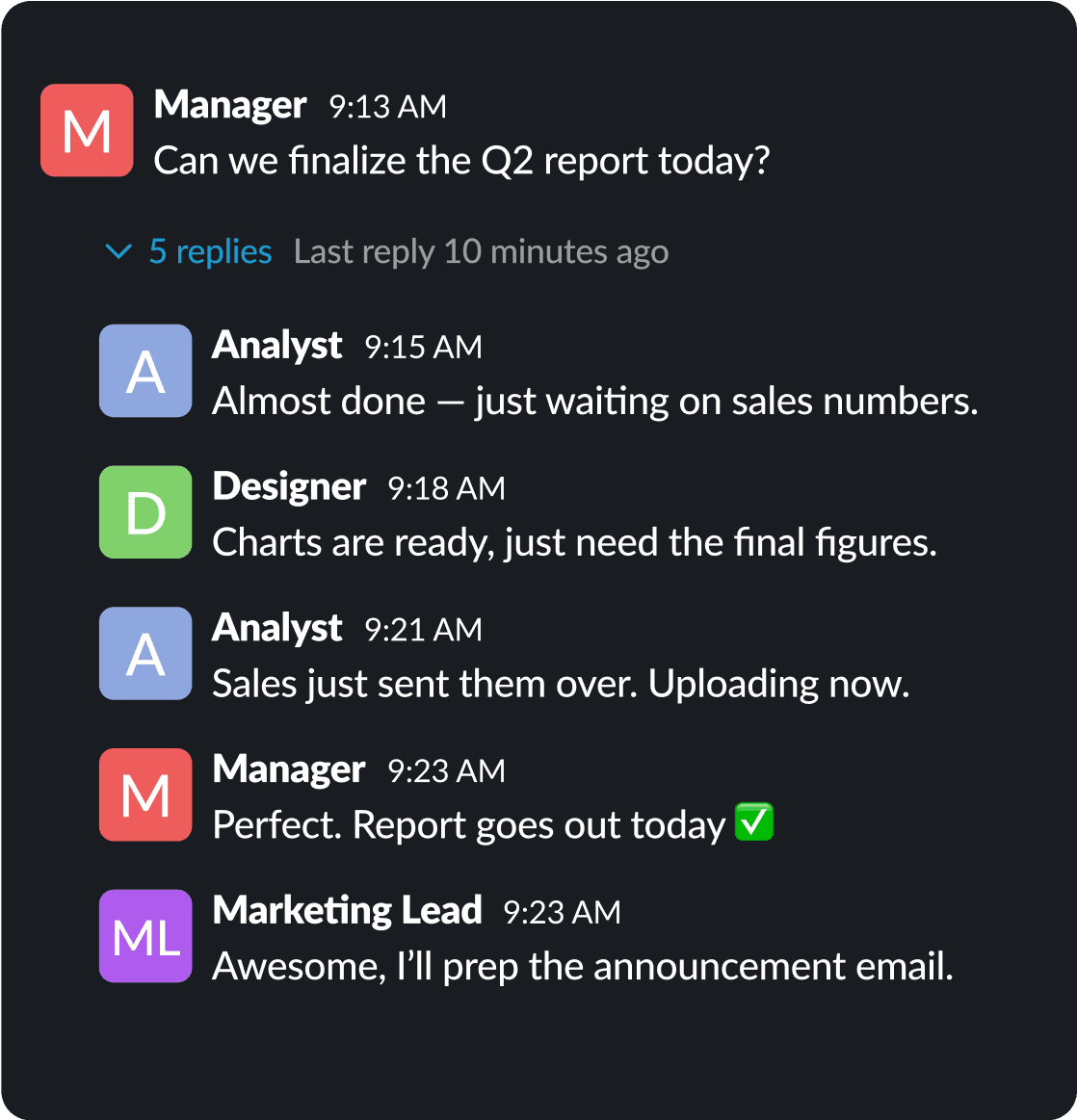
Threads are Slack's way of organizing replies to a specific message. When someone replies "in thread," their response gets grouped together in a separate, collapsible conversation attached to the original message. Think of it like comment threads on social media, where all the back-and-forth about one topic gets nested together.

Threads are Slack's way of organizing replies to a specific message. When someone replies "in thread," their response gets grouped together in a separate, collapsible conversation attached to the original message. Think of it like comment threads on social media, where all the back-and-forth about one topic gets nested together.

The Problem

90% of users either avoid threads or struggle with them, turning a core feature meant to organize conversations into a barrier for basic replies.

90% of users either avoid threads or struggle with them, turning a core feature meant to organize conversations into a barrier for basic replies.

What Slack Users Expect

What Slack Users Expect

  • Quick inline replies

  • Everyone sees the replies

  • Conversation feels natural

The Current Reality in Slack

The Current Reality in Slack

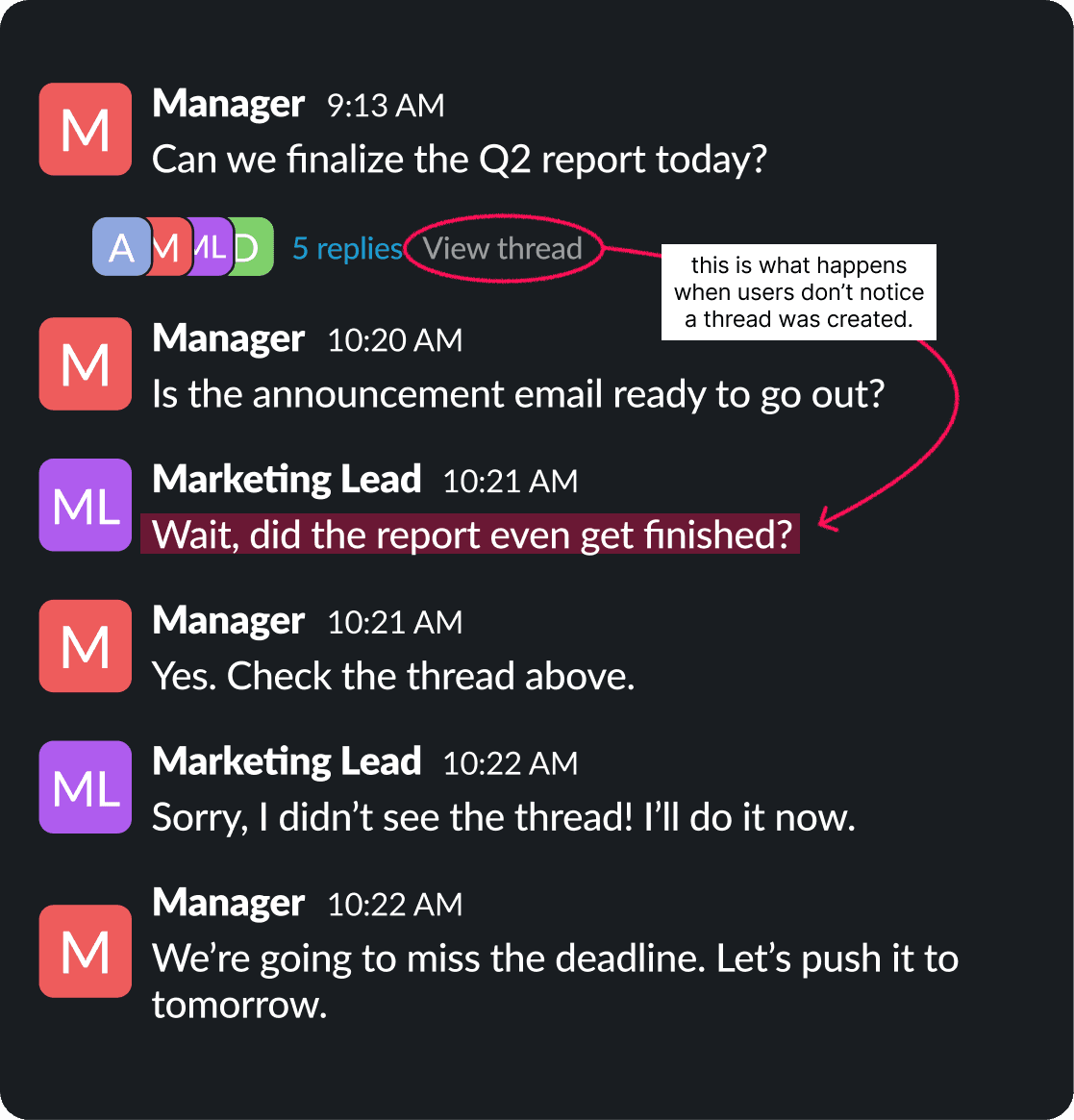
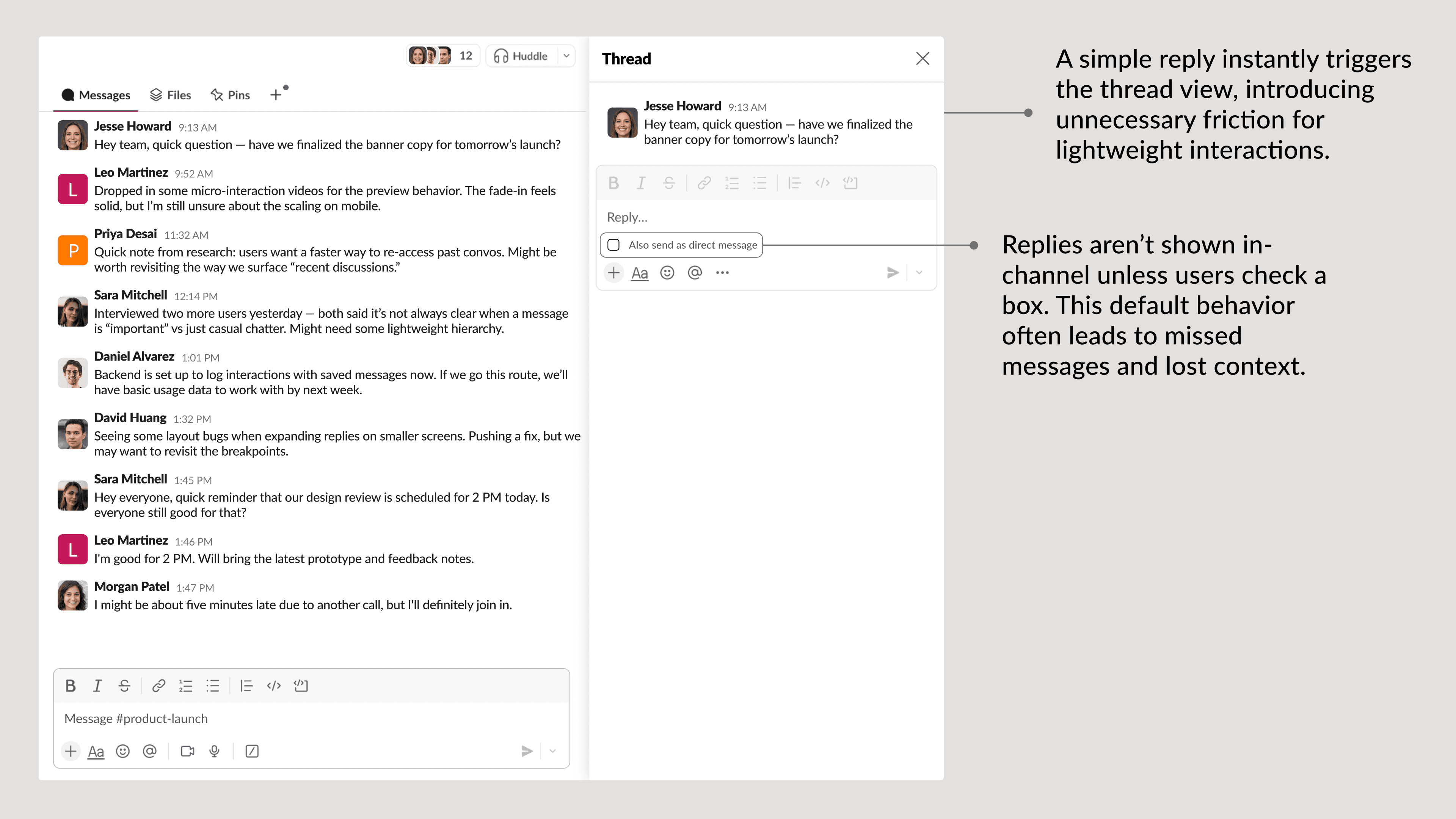
  • Every “reply” becomes a thread

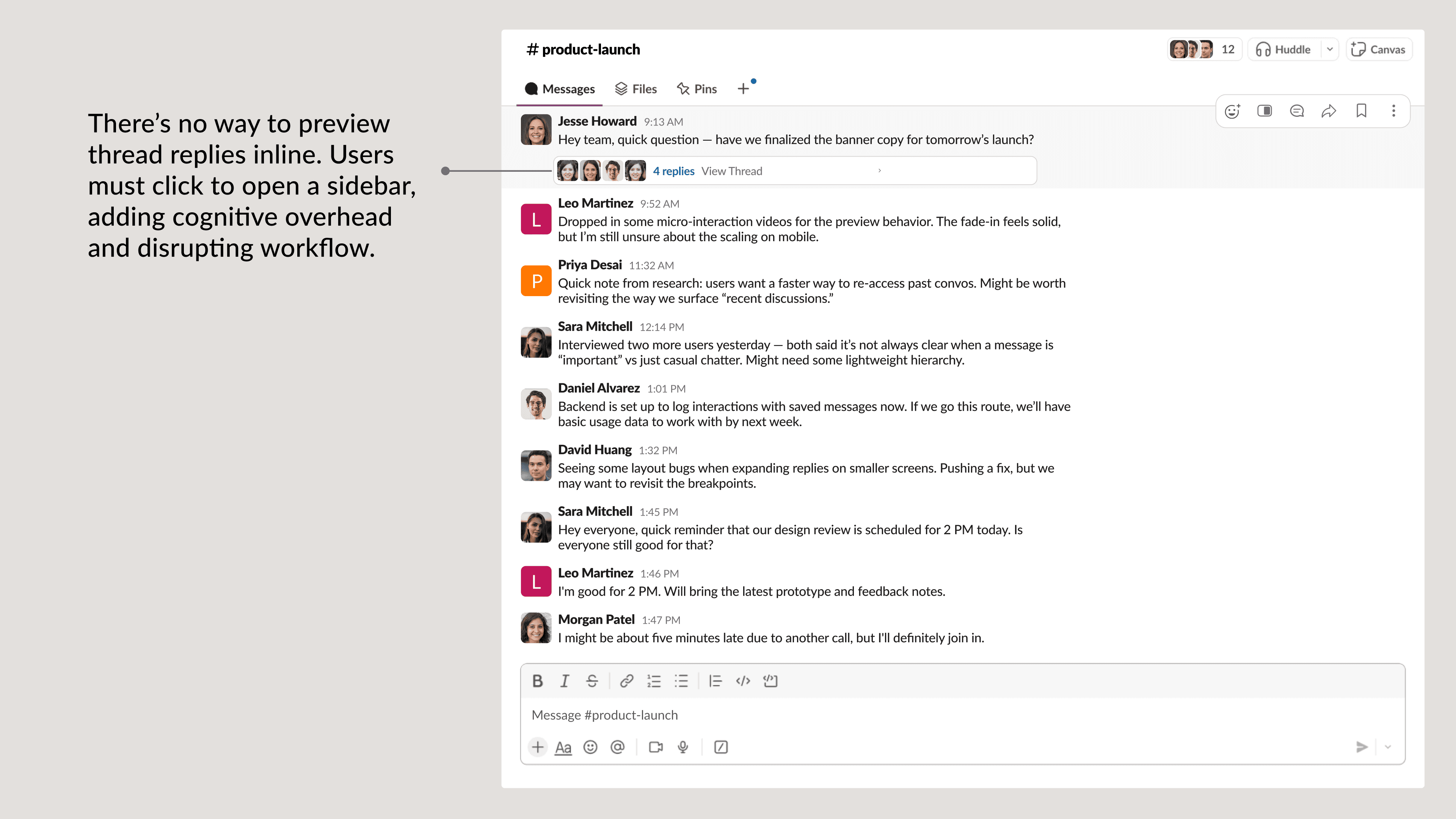
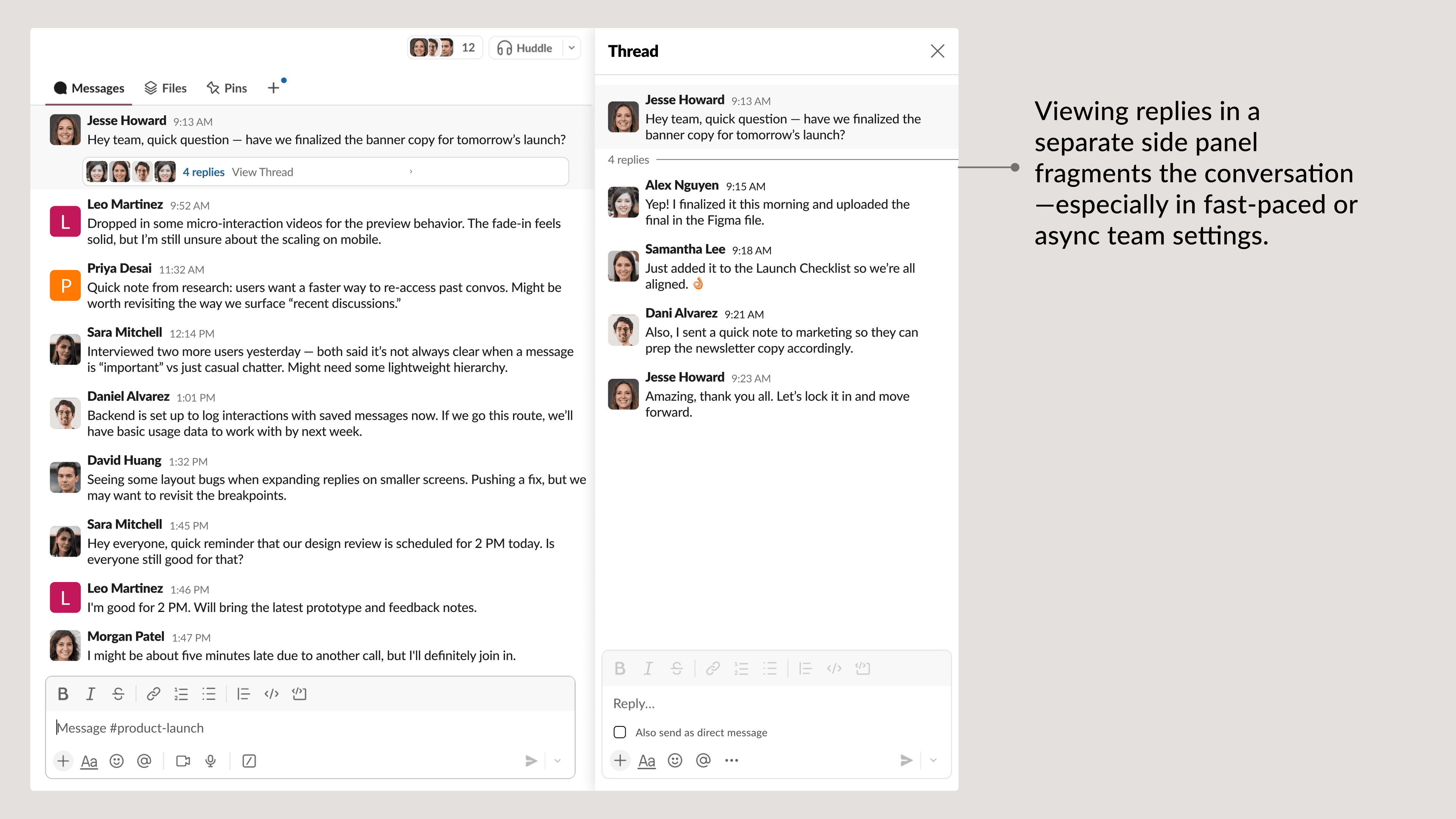
  • Threads vanish from main view unless you open in sidebar

  • Important messages get hidden

The Challenge at Hand

How might we eliminate the friction that keeps majority of users from engaging with replies, while still supporting the users who need organized discussions?

How might we eliminate the friction that keeps majority of users from engaging with replies, while still supporting the users who need organized discussions?

Let's explore why the current version of threads were failing so many users.

Let's explore why the current version of threads were failing so many users.

Research

Understanding the Problem

Key Insights from In-depth Research

Through hands-on usage analysis, observation of real-world Slack conversations, and direct interviews with 20 Slack users across different team sizes and industries, I discovered three consistent friction points:

70% actively avoided threads,

describing them as "too formal" and disruptive to natural conversation flow.

20% were unaware threads existed,

missing opportunities for organized discussions entirely.

10% used threads strategically,

but struggled to get teammates to adopt consistent behavior.

Dissecting Slack's Current Thread System through Heurisitic Analysis
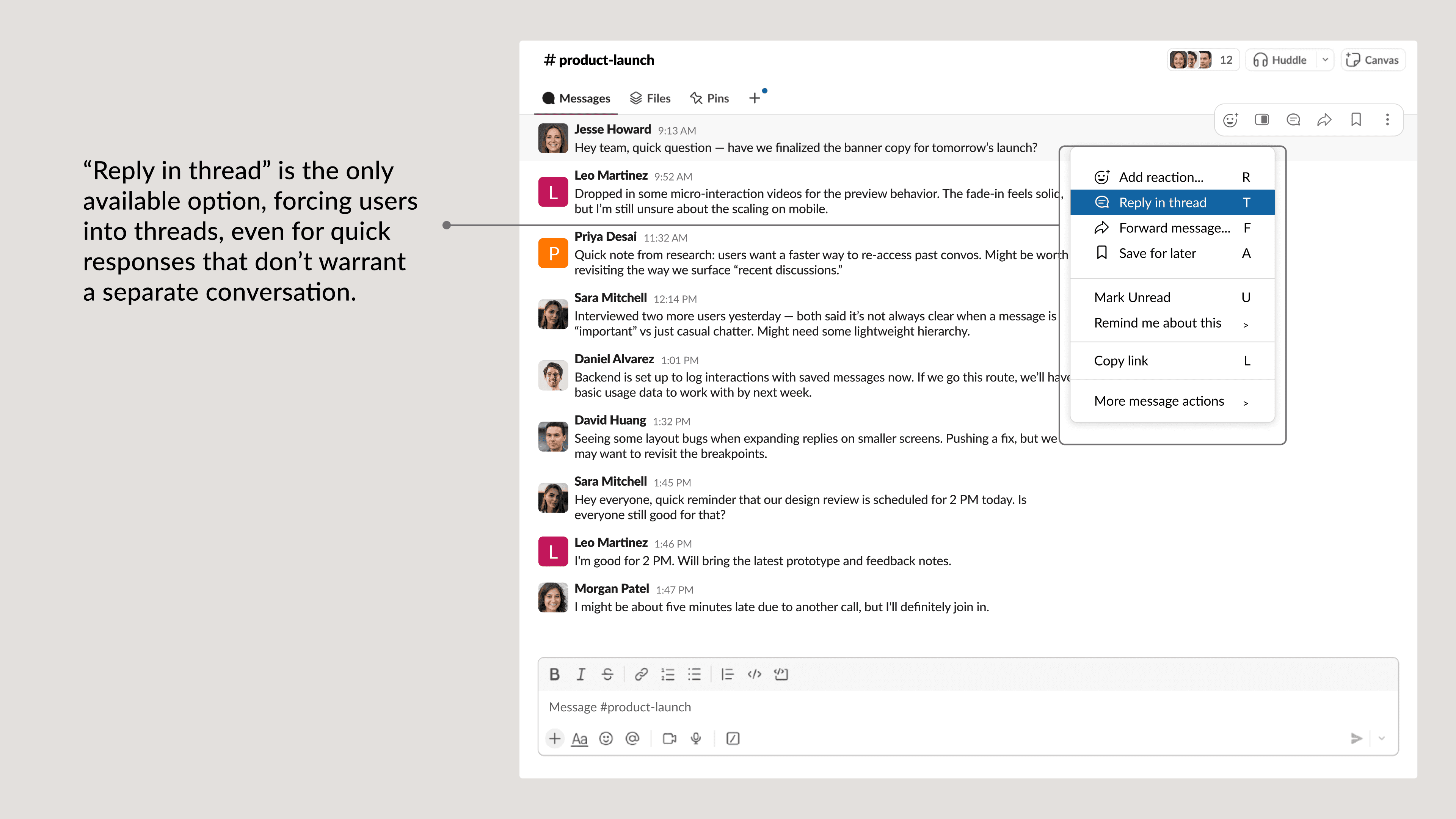
Slack's current thread system creates unnecessary friction at every step. Want to see replies? You have to open a sidebar. Want to reply quickly? You're forced into "Reply in thread" mode, which feels too formal for casual responses. The result: replies disappear from the main conversation, teammates miss updates, and simple interactions become complicated decisions.

Slack's current thread system creates unnecessary friction at every step. Want to see replies? You have to open a sidebar. Want to reply quickly? You're forced into "Reply in thread" mode, which feels too formal for casual responses. The result: replies disappear from the main conversation, teammates miss updates, and simple interactions become complicated decisions.

The Three Core Friction Points

The Three Core Friction Points

Overcomplicating Quick Replies

Overcomplicating Quick Replies

Simple replies felt like they required their own separate space, causing hesitation.

Simple replies felt like they required their own separate space, causing hesitation.

All Replies Look Equal

All Replies Look Equal

No visual distinction between casual conversation and critical discussions.

No visual distinction between casual conversation and critical discussions.

Low Follow-Up Visibility

Low Follow-Up Visibility

Threaded replies caused missed updates and lost context in the main channel.

Threaded replies caused missed updates and lost context in the main channel.

After digging into these patterns, I translated the insights into clear, actionable principles that shaped every decision going forward. Each goal directly addresses a friction point from research and points toward a smoother, more human reply experience.

High Level Goals

  1. Make replies feel natural

  2. Keep critical updates visible

  3. Encourage re-engagement

Design Process

Iteration Journey

Iteration Journey

Before landing on the final experience, I tested multiple directions to see how replies could feel effortless and less likely to get lost.

Each iteration tackled a different friction point, reducing formality, keeping users in flow, and helping important replies stay visible.

Before landing on the final experience, I tested multiple directions to see how replies could feel effortless and less likely to get lost.

Each iteration tackled a different friction point, reducing formality, keeping users in flow, and helping important replies stay visible.

Reframing the reply

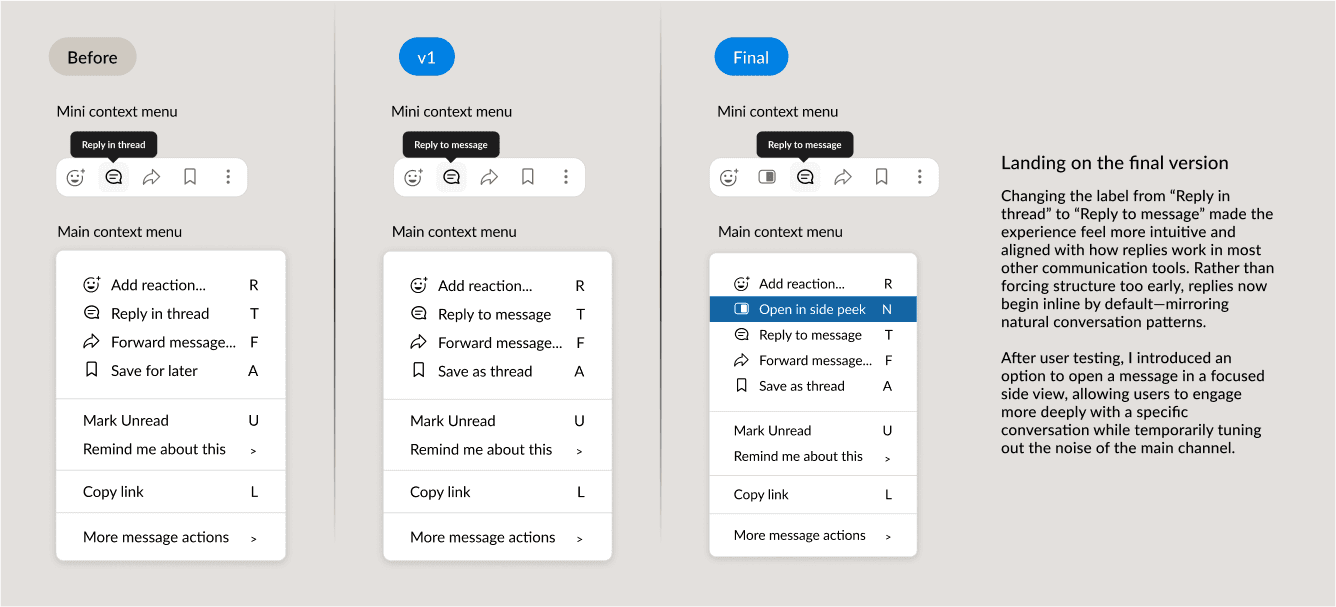
  • Before: “Reply in thread” felt too formal and pulled replies out of the main flow.

  • After: Changed to “Reply to message” to mirror natural chat behavior.

  • Impact: Quick replies felt lighter and more intuitive, directly addressing the formality barrier identified in research.
Inline by Default

  • Before: “Reply in thread” felt too formal and pulled replies out of the main flow.

  • After: Changed to “Reply to message” to mirror natural chat behavior.

  • Impact: Quick replies felt lighter and more intuitive, directly addressing the formality barrier identified in research.
Side Peek for Depth

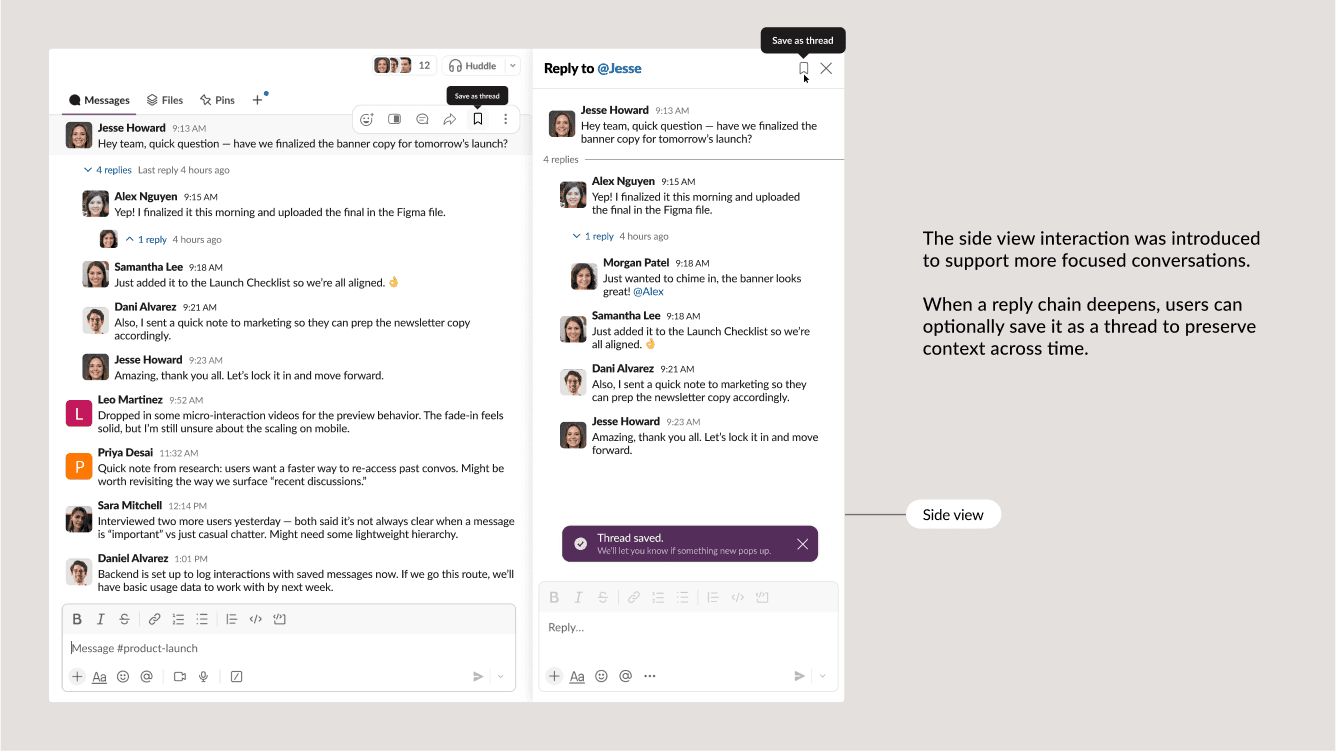
  • Before: Threads automatically opened a side view with no alternative option.

  • After: Added a side peek view for focused discussion without losing place.

  • Impact: Supported deeper dives while keeping the main channel intact, satisfying both casual and strategic thread users.
Smarter Reminders

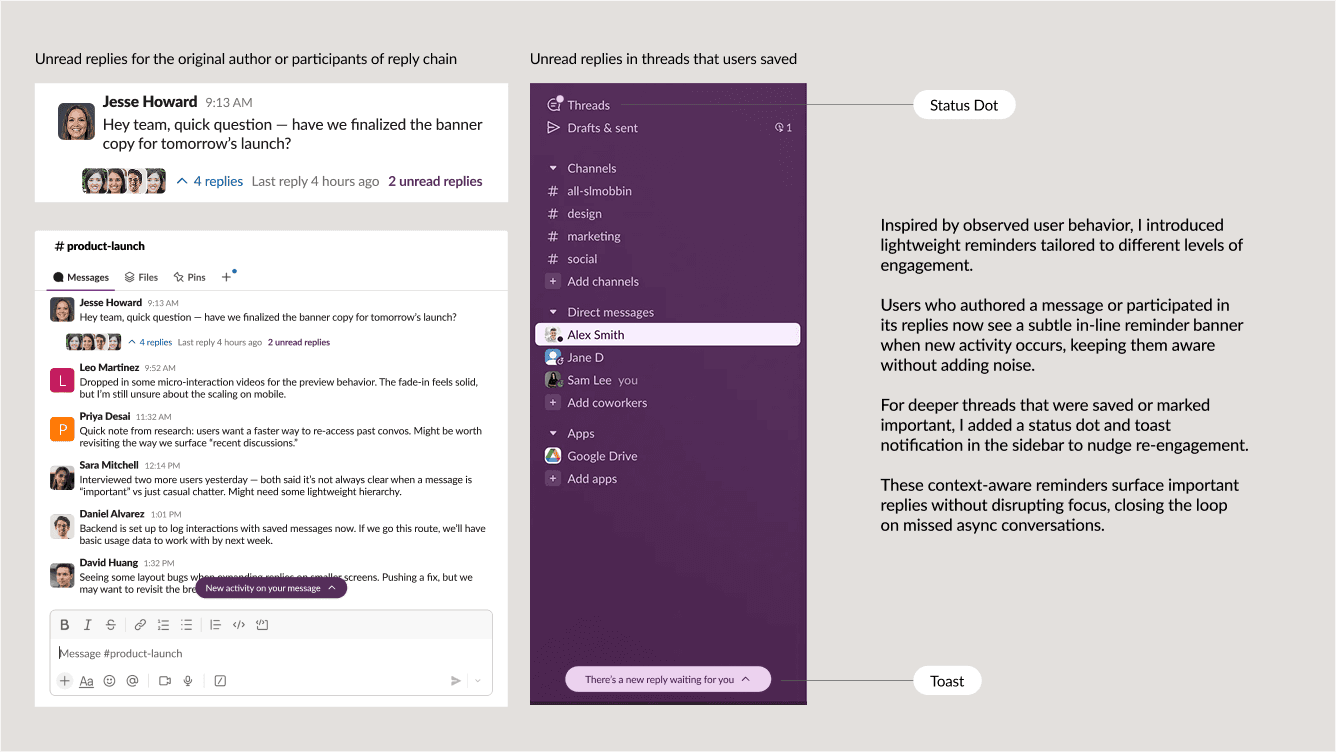
  • Before: Users forgot about replies once they left a thread.

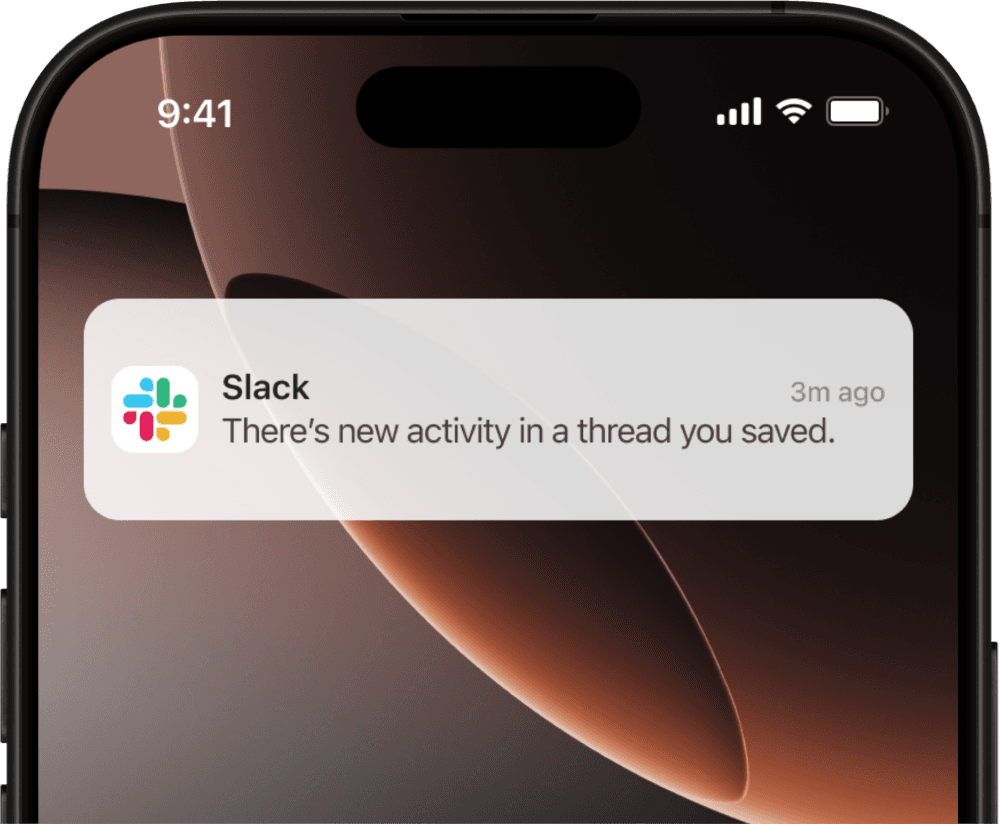
  • After: Designed lightweight reminders — inline banners, toast alerts, and status dots.

  • Impact: Important replies stayed visible without adding noise, directly addressing the follow-up visibility issue that caused missed deadlines.
The Solution

Rethinking How Conversations Unfold and Stay Visible

Rethinking How Conversations Unfold and Stay Visible

Replies should feel effortless — no decision fatigue about threads, no hunting for lost messages, no friction in everyday conversation.

Replies should feel effortless — no decision fatigue about threads, no hunting for lost messages, no friction in everyday conversation.

Reframing the reply

Reframing the reply

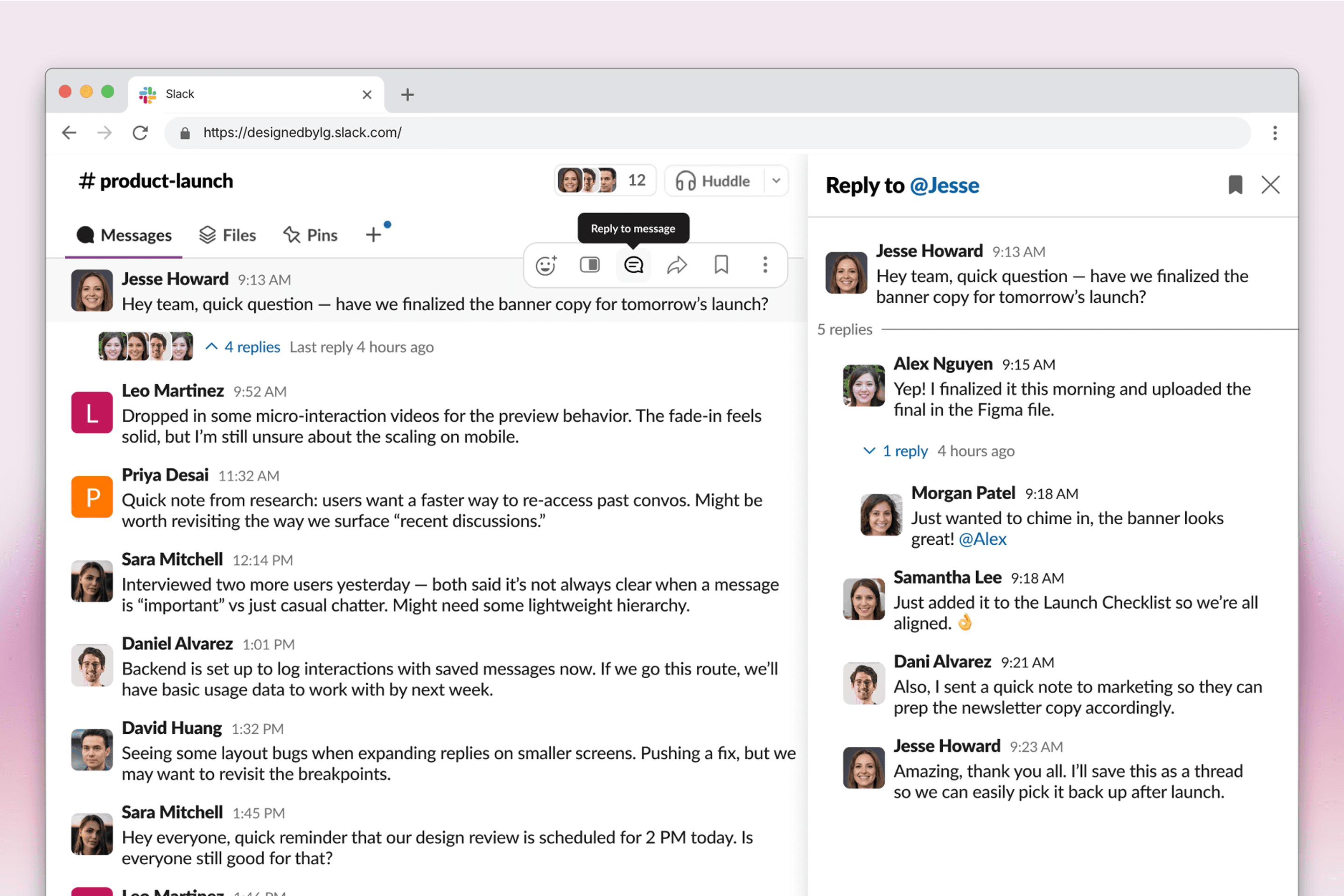
Before, the option to “Reply in thread” implied formality and friction. Reworking the interaction to be “Reply to message”, created a big shift in behavior, despite being a small change. Users no longer felt like they were committing to a new conversation format. It simply felt like... replying.

Before, the option to “Reply in thread” implied formality and friction. Reworking the interaction to be “Reply to message”, created a big shift in behavior, despite being a small change. Users no longer felt like they were committing to a new conversation format. It simply felt like... replying.

Meeting users where they are

Not every reply needs structure — But some do.

Not every reply needs structure — But some do.

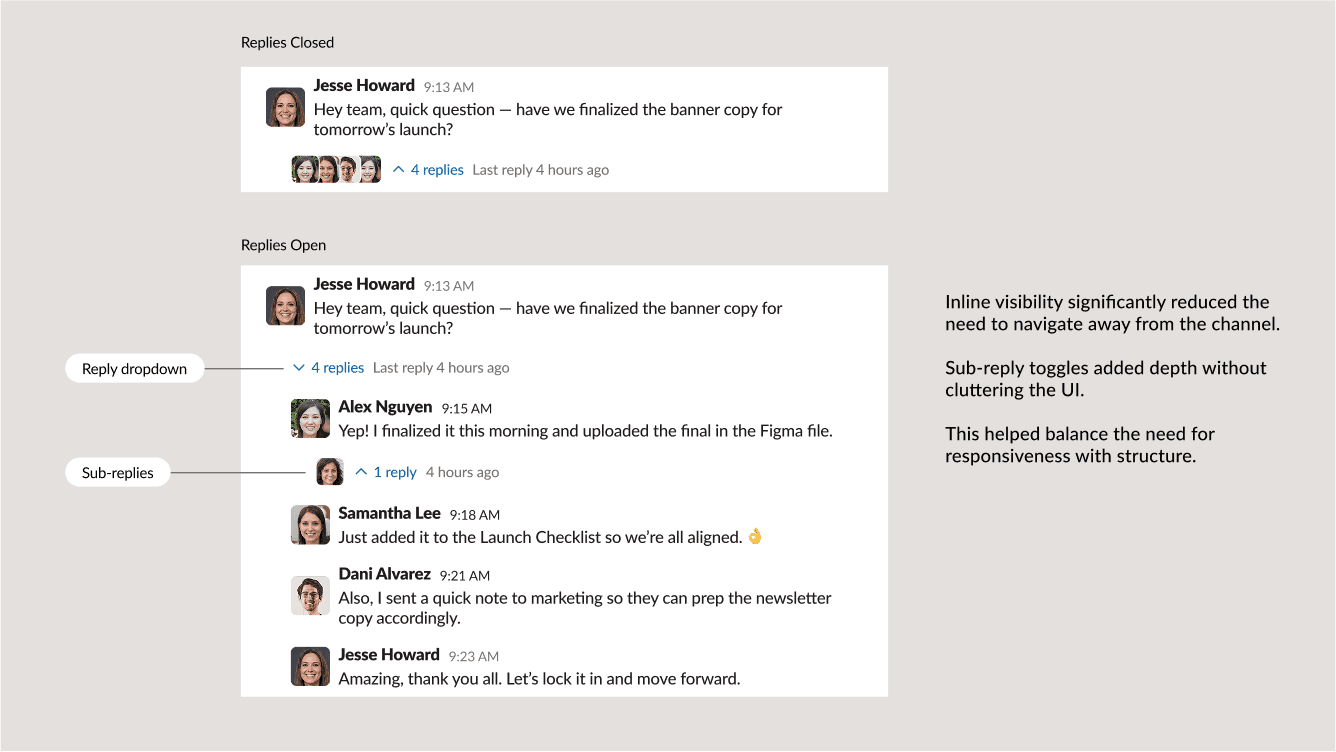
To mirror natural conversation flow, I made replies appear inline by default, directly beneath the original message.
This helped users stay in the moment and reduced the cognitive cost of jumping between views.


To mirror natural conversation flow, I made replies appear inline by default, directly beneath the original message.
This helped users stay in the moment and reduced the cognitive cost of jumping between views.


Over time, conversations evolve. I gave users the ability to save any reply chain as a thread, offering the benefits of organization without imposing it from the start.

Over time, conversations evolve. I gave users the ability to save any reply chain as a thread, offering the benefits of organization without imposing it from the start.

Creating Space for Deeper Focus

Creating Space for Deeper Focus

I introduced a Side Peek view that opens the full message thread without leaving the channel. This gave users a focused canvas to engage deeply. It was perfect for longer discussions or async catch-up. Users could dive deep without losing their place in the main conversation.

I introduced a Side Peek view that opens the full message thread without leaving the channel. This gave users a focused canvas to engage deeply. It was perfect for longer discussions or async catch-up. Users could dive deep without losing their place in the main conversation.

Keeping conversations alive

One of the biggest problems wasn’t starting a reply. It was remembering that it happened at all.

One of the biggest problems wasn’t starting a reply. It was remembering that it happened at all.

Most users weren’t checking back in on reply chains. Many didn’t even realize someone had responded.

Most users weren’t checking back in on reply chains. Many didn’t even realize someone had responded.

I designed a system of lightweight, context-aware reminders:

I designed a system of lightweight, context-aware reminders:

  • Inline banners to gently surface new activity for authors or participants

  • Status dots and toast notifications in the sidebar for saved threads

  • Inline banners to gently surface new activity for authors or participants

  • Status dots and toast notifications in the sidebar for saved threads

These subtle nudges helped close the loop without disrupting focus.

These subtle nudges helped close the loop without disrupting focus.

Conclusion

Learnings and Future Steps

As a Slack user myself, I've always found it frustrating that every reply has to be a thread. My Threads tab became a graveyard of throwaway comments I never meant to save and I was forced to see a simple reply to someone get overshadowed by a flood of new updates.

That moment of friction made something click: the way we reply shouldn't be dictated by structure, it should be shaped by intention.

What I learned:

  • Small language shifts can change behavior. Changing "Reply in thread" to "Reply to message" removed the formality barrier that kept 70% of users from engaging.

  • People tolerate bad UX more than you think. Users developed workarounds (like avoiding threads entirely) rather than abandoning Slack, masking the true scale of the problem.

  • Restraints sharpen focus. The constraint of keeping replies visible while preserving threading led to the inline-by-default solution.

  • Don't overdesign what's meant to feel human. The most impactful changes were about reducing friction, not adding features.

What I'd explore next:

Based on the 10% of strategic thread users, there's still opportunity to explore:

  • What if users could organize their saved threads into workspaces?

  • Could the thread sidebar become a more intentional project management tool?

In the end, this project reminded me that good design should feel invisible. Sometimes the biggest impact comes from making the most common interactions feel as smooth as they can be.

Design should feel like second nature — let’s create that together.

Based in

United States

Back to top ↑

Design should feel like second nature — let’s create that together.

Based in

United States

Back to top ↑

Design should feel like second nature — let’s create that together.

Based in

United States

Back to top ↑