ChipAway
Turning Debt Payoff into Small Wins and Measurable Momentum
Context
ChipAway is a mobile app concept designed to help early-career renters chip away at credit card debt through automated round-ups and flexible micro-payments.
My Role
As the sole product designer on this project, I led the end-to-end design process—from user research and competitive analysis to wireframing, visual design, and prototyping.
Platform
Mobile
Roles
Full-Stack Designer
Skills
UX Research
Interface Design
Interactive Prototyping
Design System
Duration
2 months
Debt is one of the most emotionally charged experiences people face.
For millions of early-career renters, credit card debt is a constant weight. You're working hard, trying to build a life—saving for your own place, thinking about starting a business, planning for the future.
But the debt you carry follows you everywhere. It affects your credit score, blocks you from opportunities, and makes every financial decision feel impossible.
For early-career renters with credit card debt, traditional debt solutions aren't built for their reality.
Fixed repayment plans don't work when your income as a freelancer or hourly worker fluctuates week to week. Budgeting apps demand discipline and consistency that's impossible when you're just trying to keep up with rent and living expenses.
The Core Challenge
High-Level goals that defined my design
Make debt progress feel visible and motivating
Allow users to chip away at debt without feeling locked in or financially overextended
Translate complex credit concepts into everyday language and actionable steps
Initial Observations
One participant put it simply: "Honestly I avoid looking at my statement. It's stressful." When progress takes months to see and apps demand consistency that variable income won't allow, avoidance becomes the default coping mechanism.
Further Understanding the Problem
To understand the debt payoff landscape, I conducted user interviews and surveys with early-career renters. The interviews explored the emotional weight of debt, the friction points in existing solutions, and the trust barriers that keep users from engaging with financial apps.
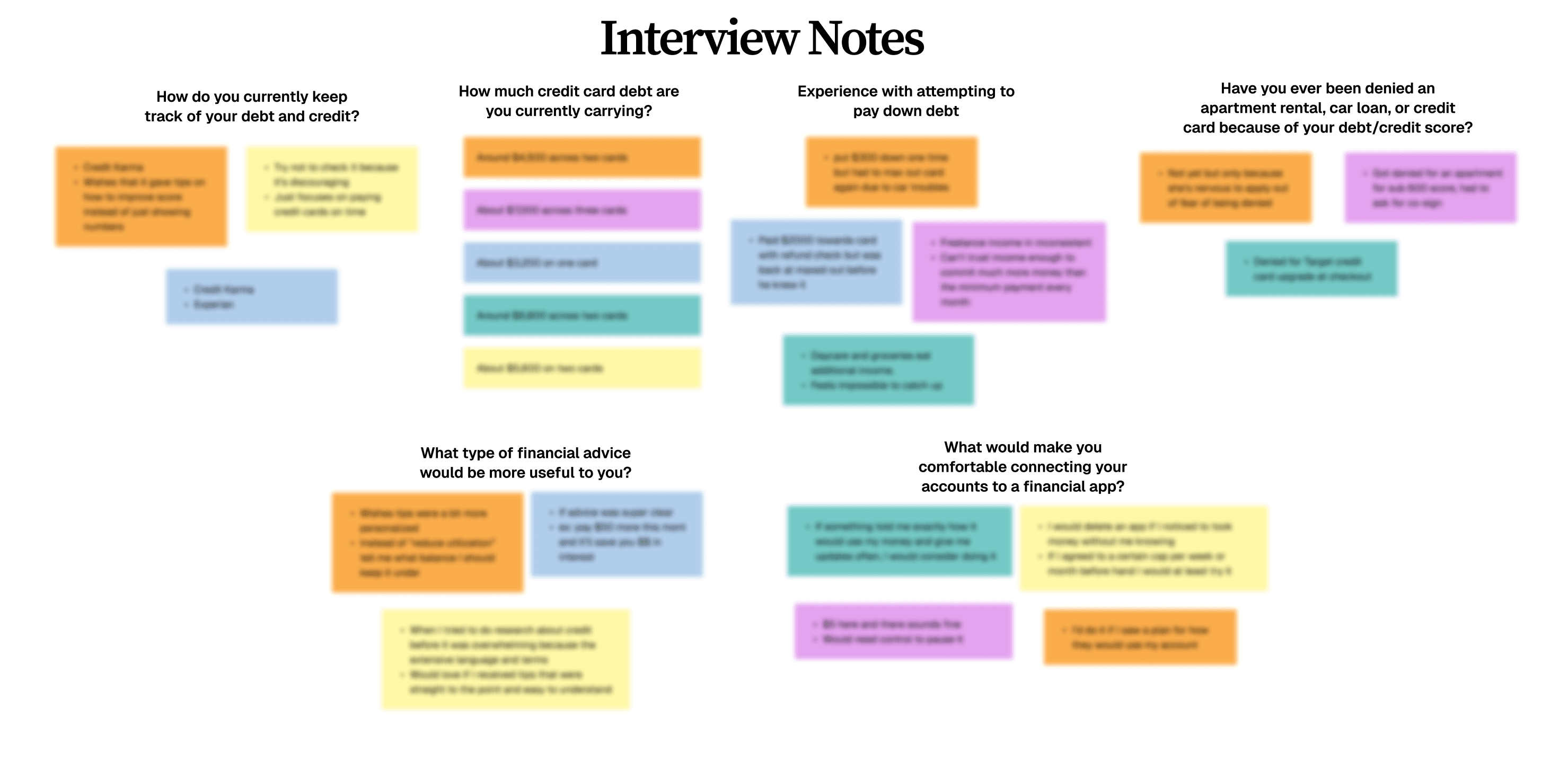
I have blurred the answers for confidentiality purposes
Pain Points
Users pay month after month, but balances barely move as interest eats away their effort. Without visible wins or positive reinforcement, the journey feels endless—so they stop looking altogether.
Financial apps bombard users with jargon-heavy charts and upsells, then ask for bank access before showing any value. Users need clear actions and apps they can actually trust.
Freelancers and hourly workers can't commit to fixed monthly payments when income fluctuates. Inflexible repayment plans force impossible choices: skip payments, overdraft accounts, or feel constant guilt.
Key Insight: people don’t need another debt tracker or budget app, they need to feel the momentum of winning, even when progress is small.
Every debt app shows you the problem. None of them make you feel like you're actively fighting back. Users needed to experience progress in real-time, celebrate small wins, and build confidence through action.
Competitor Research
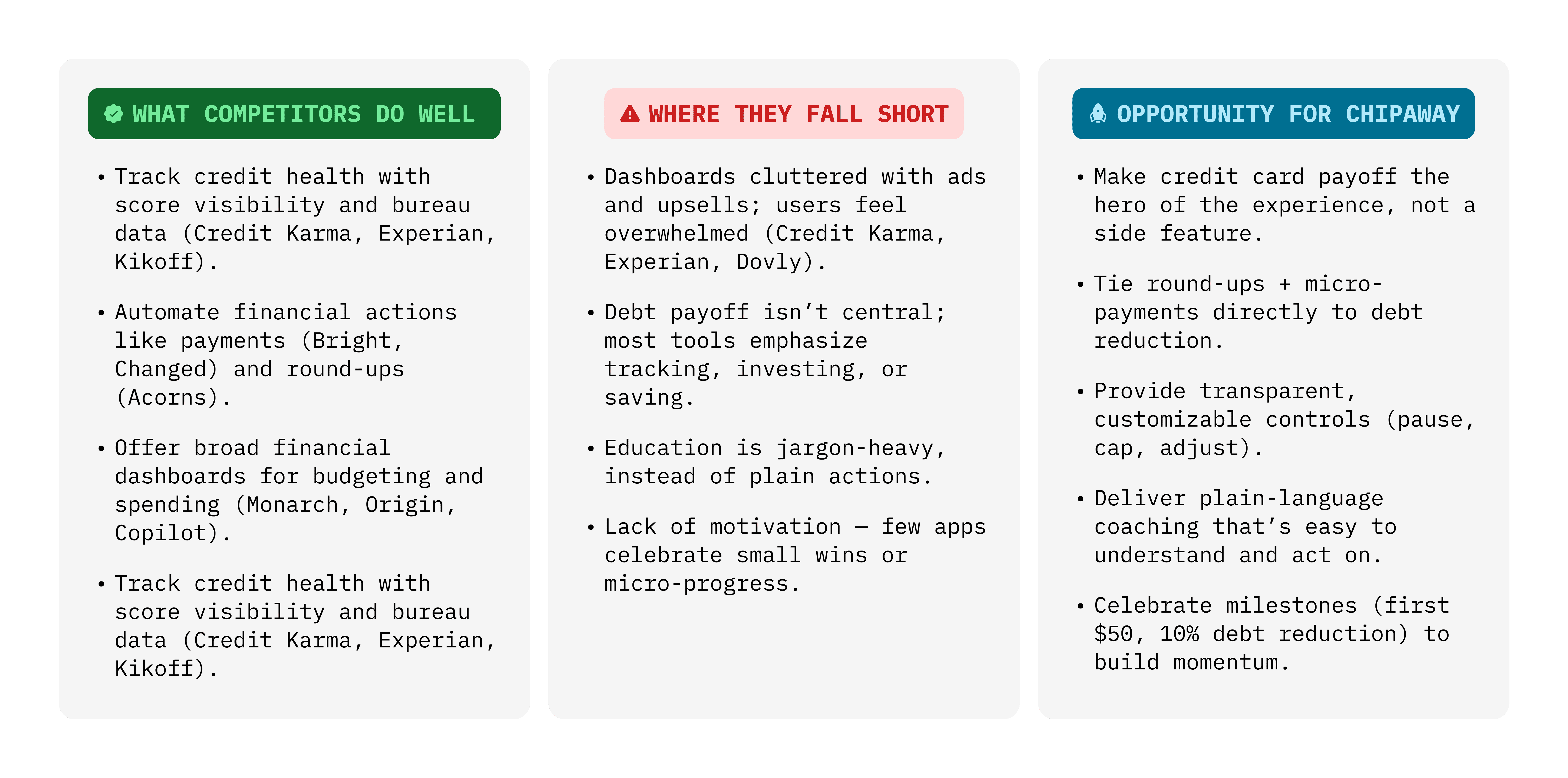
Current financial apps bury debt payoff under ads and complexity, offer no flexibility for variable income, and never celebrate progress.
Design Process & Explorations
With research insights in hand, I focused on three core challenges: earning trust before asking for access, designing flexibility for real life, and making invisible progress visible.
Building Trust Before Asking for Access.
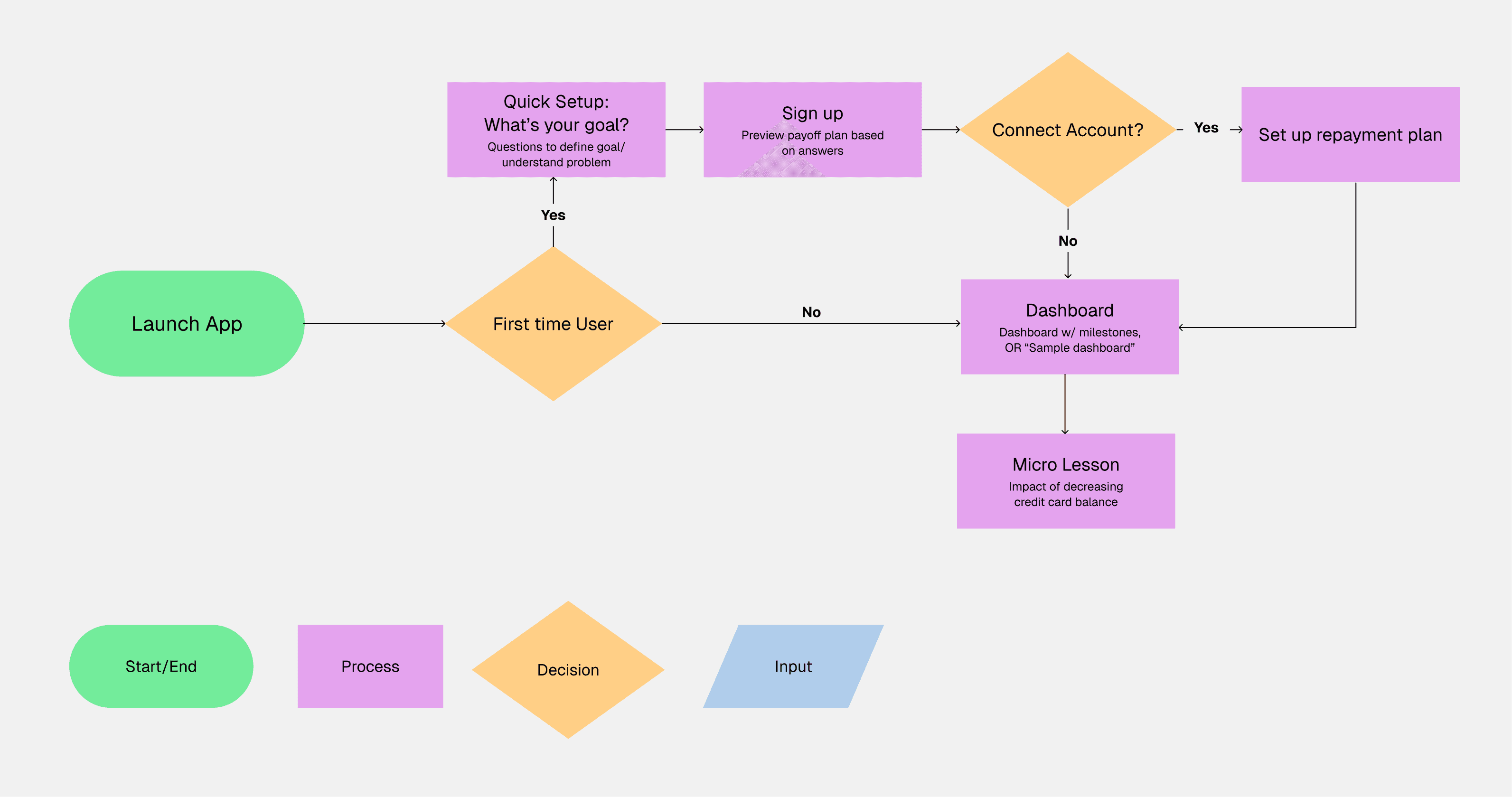
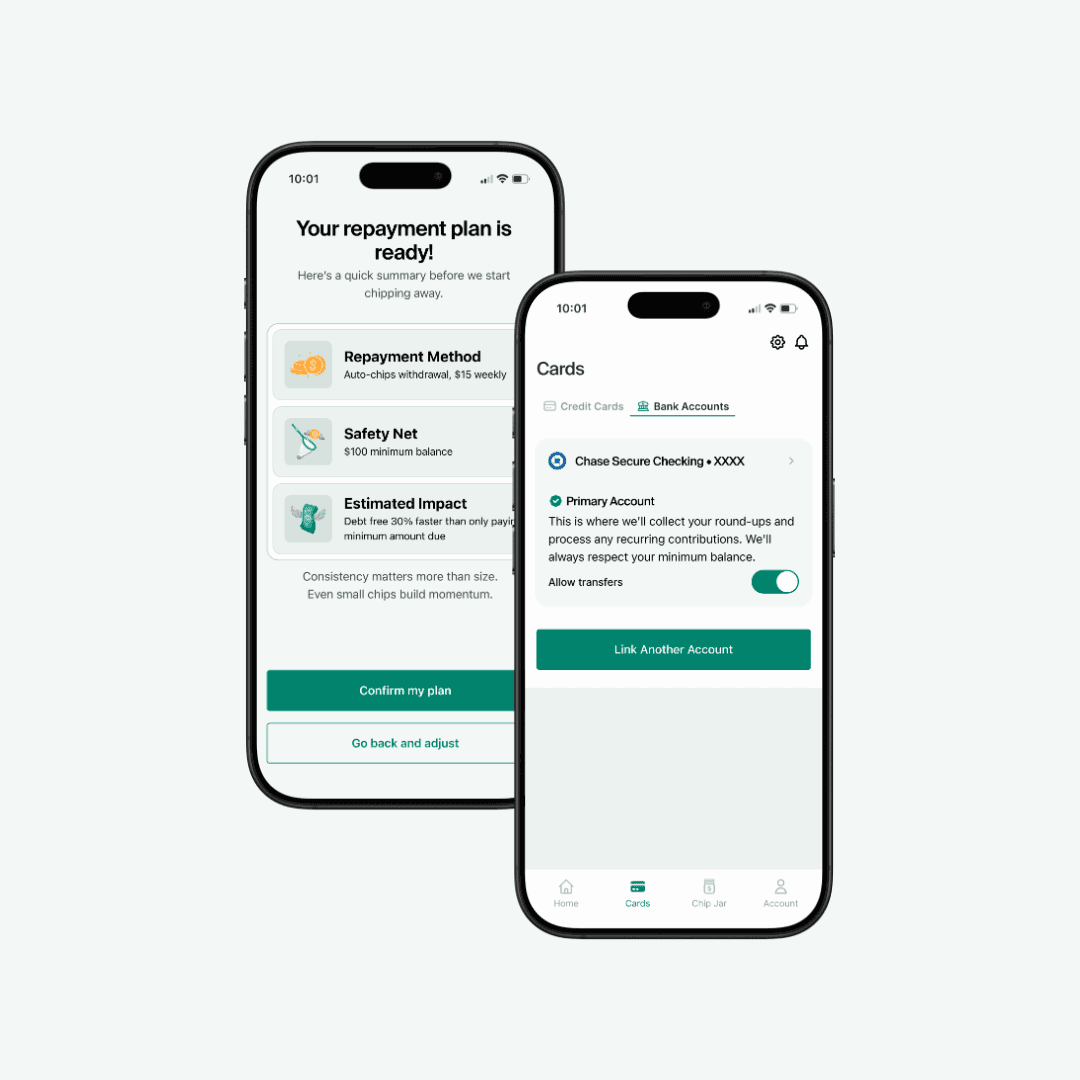
I designed a flow that builds trust by showing value before asking for access. Users preview their personalized plan first, then choose to connect accounts—or explore the full dashboard with sample data if they're not ready.
Making Small Progress Feel Exciting
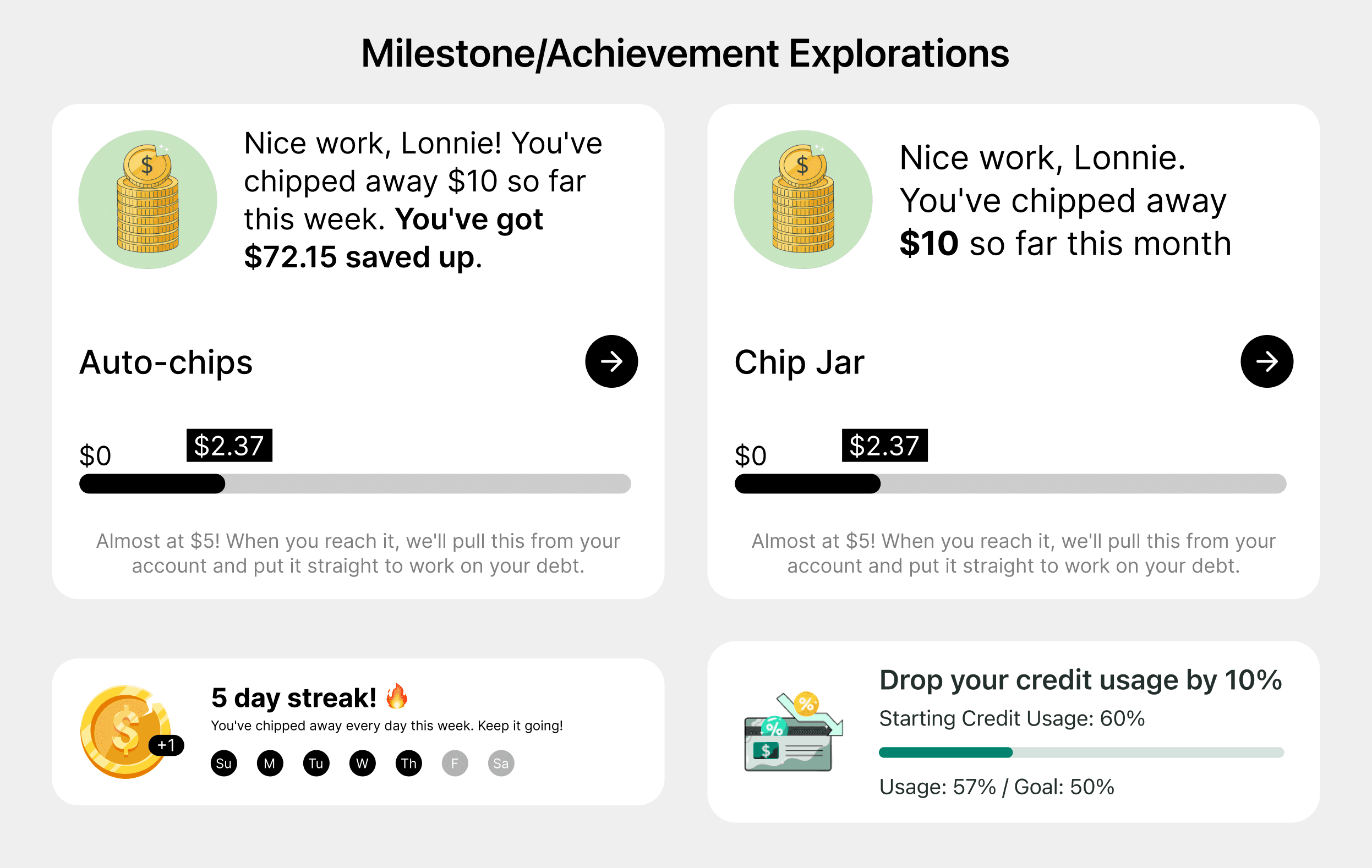
I tested different ways to visualize micro-progress, from transaction-by-transaction counters to accumulated totals.
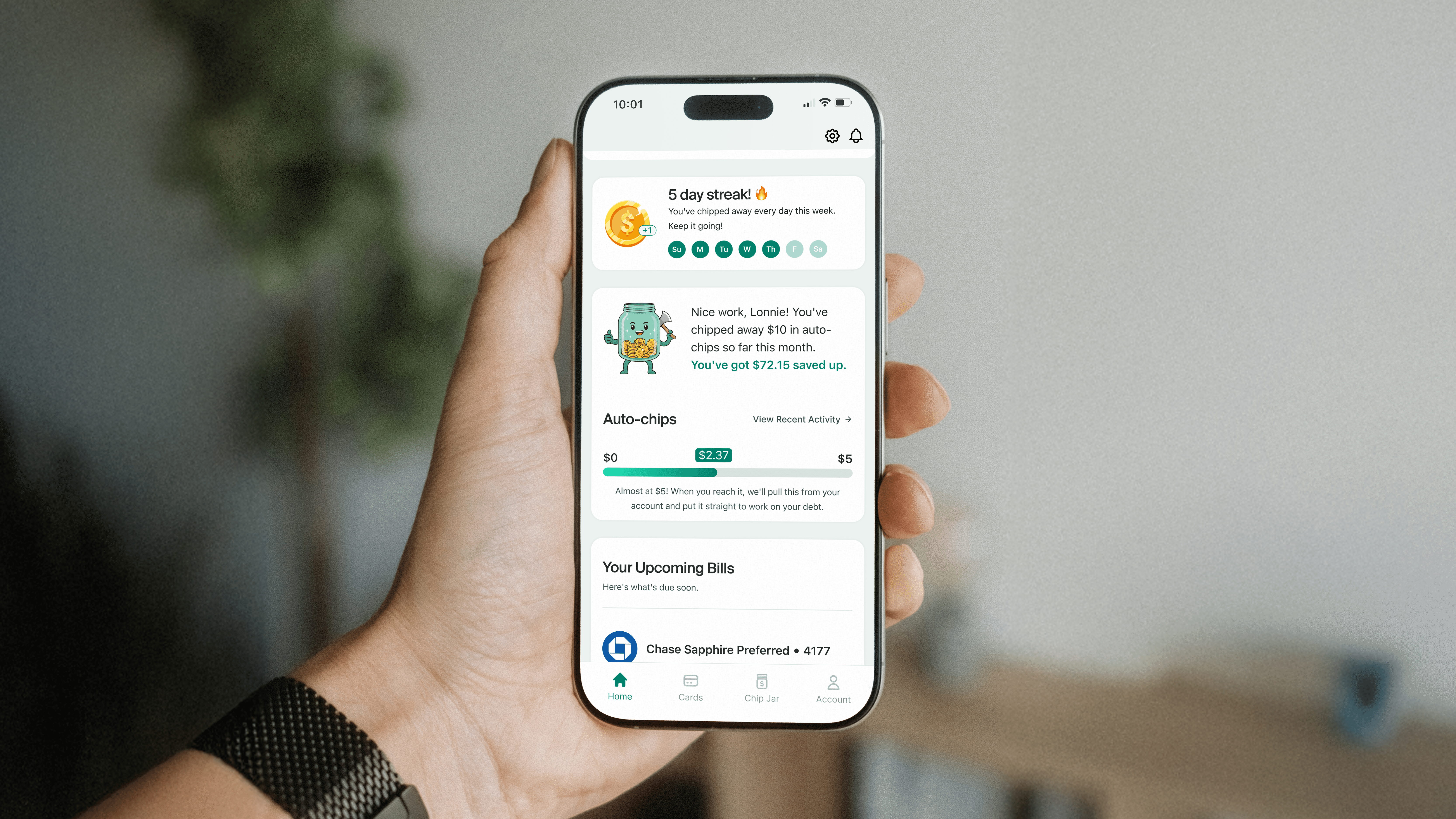
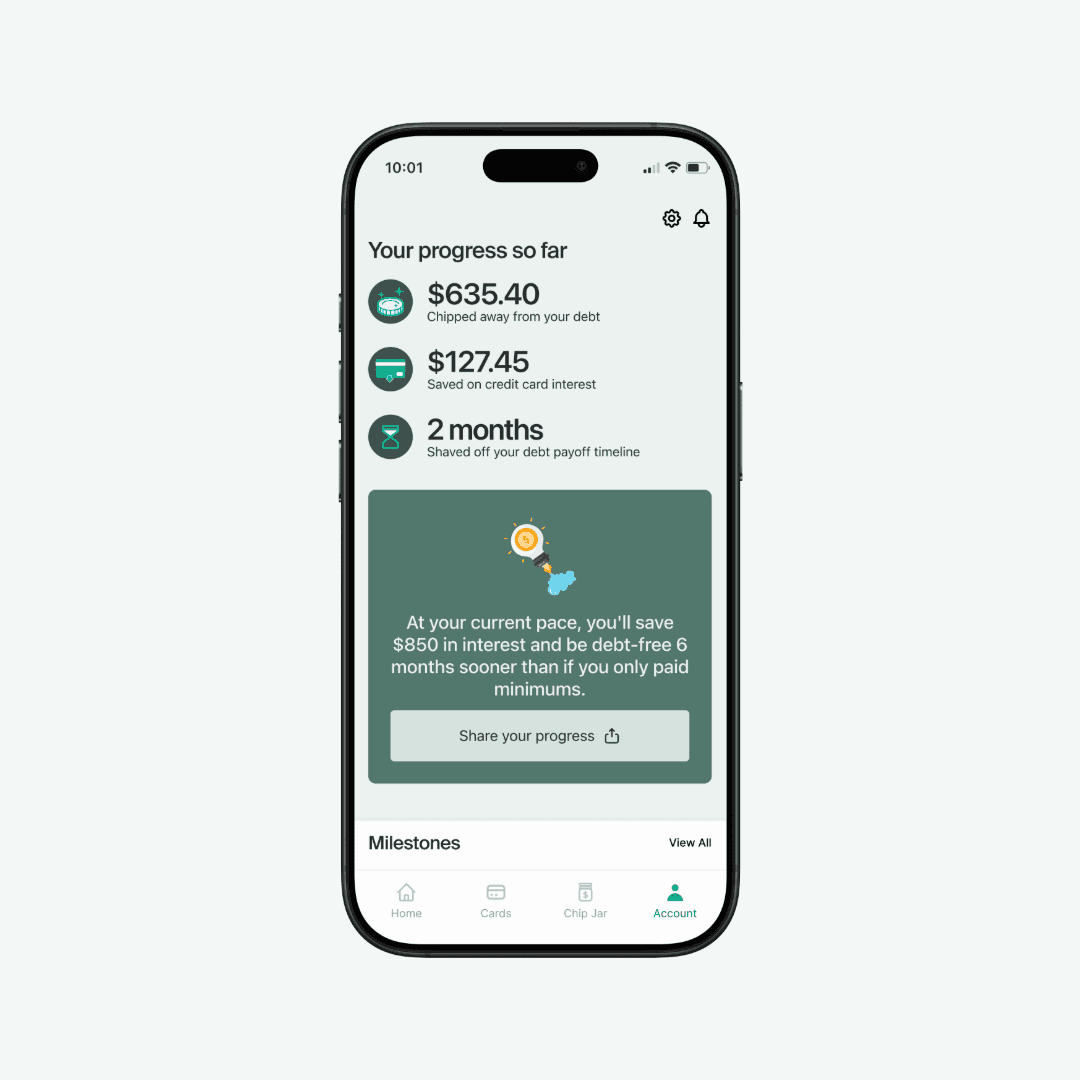
The breakthrough came from treating progress like a game: Auto-Chip progress bars that fill toward the next $5 transfer, streak tracking that celebrates consistency, and milestone achievements (first $25, 10% balance drop, $1K paid) that turn invisible progress into unlockable wins.
Finding the Right Moment to Notify
Every round-up is progress, but notifying users after every purchase would be overwhelming. I needed to find the balance between keeping users informed and not annoying them with constant pings.
Early versions tested different notification triggers:
immediate alerts after each round-up (too noisy)
daily summaries (easy to ignore)
or only when money transferred to debt (too disconnected from the action). Users either felt spammed or forgot ChipAway was even working.
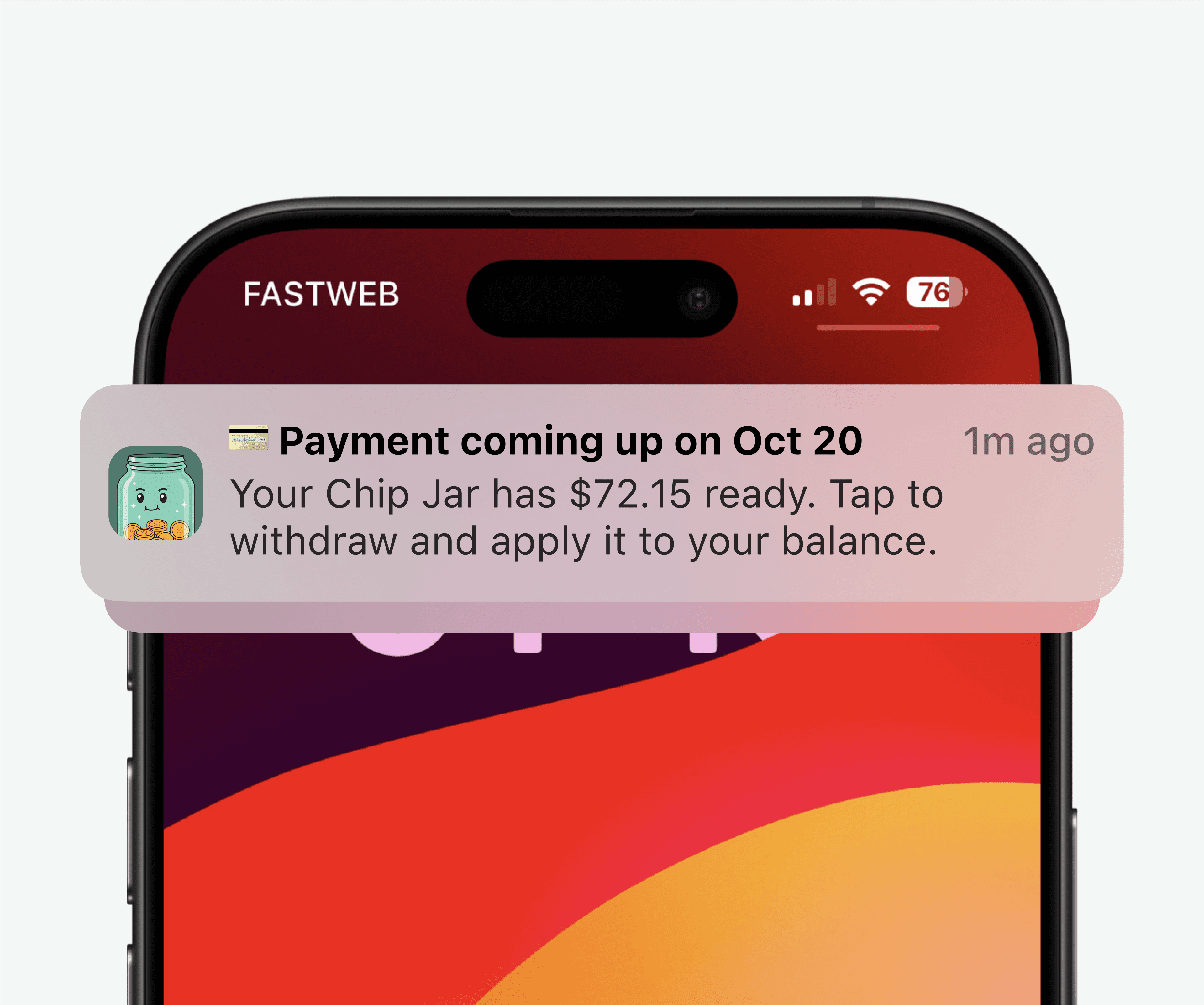
The solution: Notifications trigger only at meaningful moments—when $5 is ready to withdraw, at round-up milestones ($10, $25, $50), and when credit card payments are due to remind users to transfer their Chip Jar savings.
Translating Credit Jargon Into Plain Language
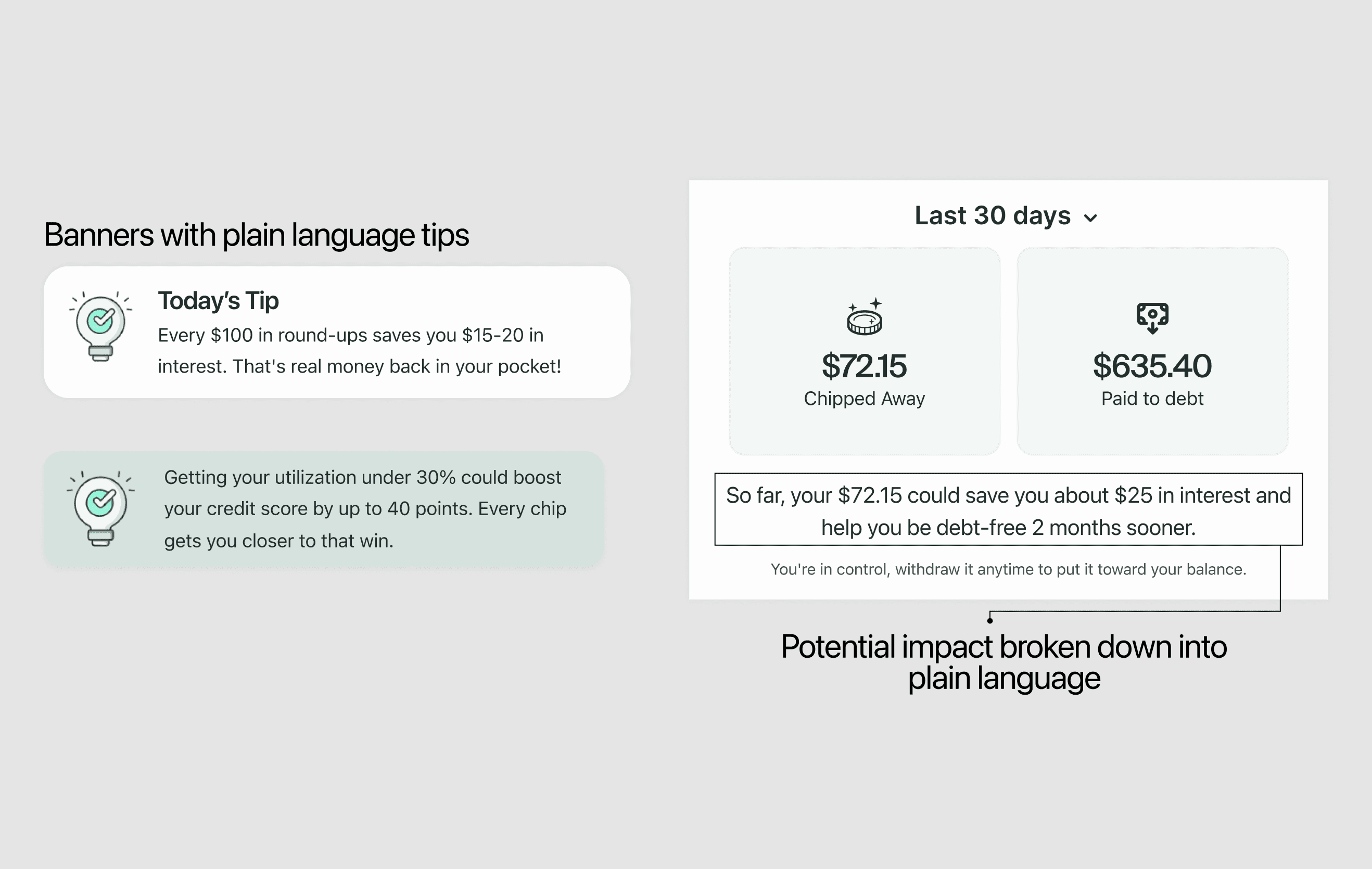
Terms like "utilization" and "APR" mean nothing to most users, they just want to know what to do.
I focused on replacing bureau terminology with actionable guidance. Instead of "reduce credit utilization to 30%," users see "target goal balance". Micro-lesson banners explain why it matters ("Lowering your balance by 10% could boost your score 20+ points") and suggest specific minimum payment amounts to avoid interest.
This would all users to understand their situation and know exactly what action to take next.
Keeping Transparency, Control, and Guidance in the Forefront
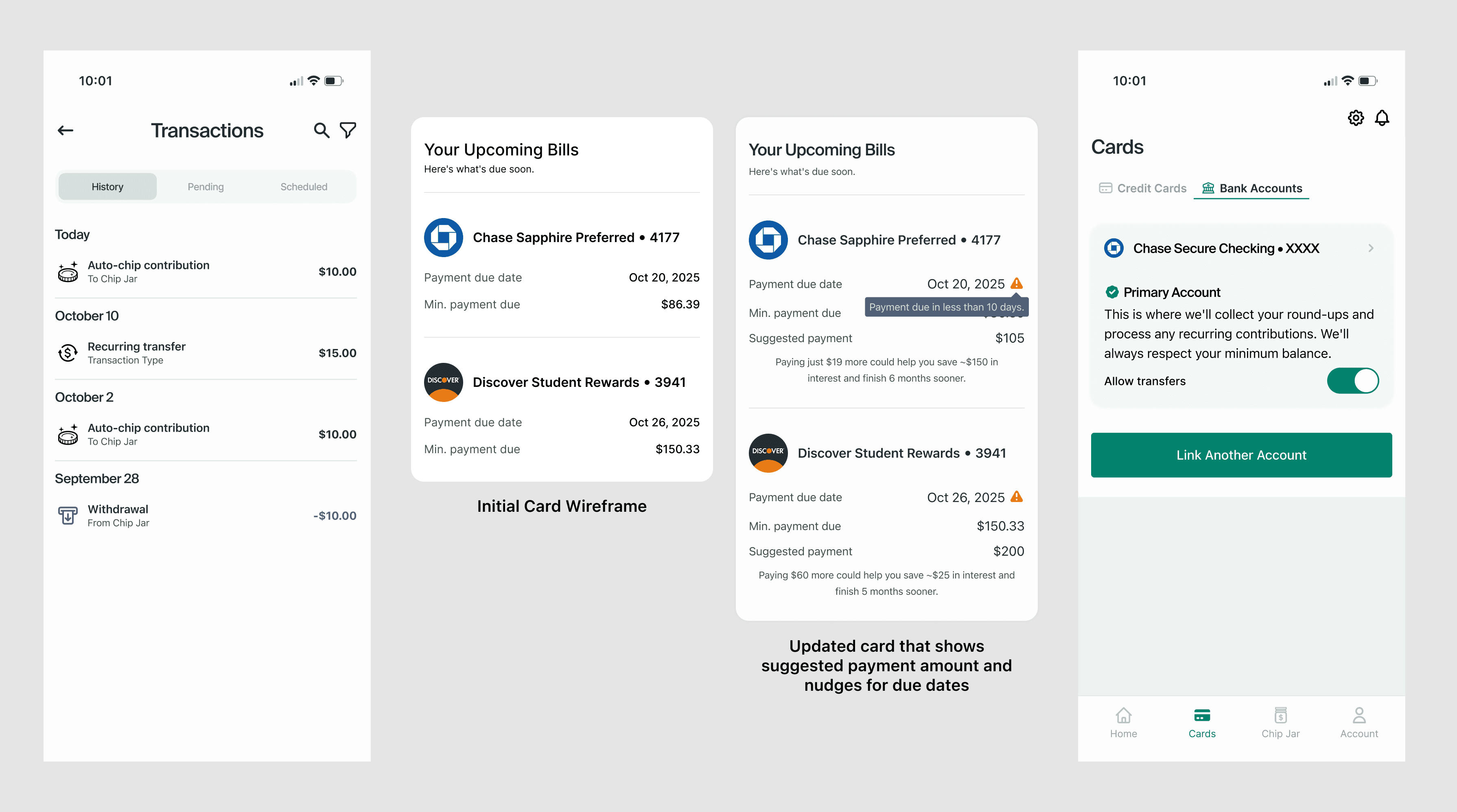
I built transparency into every layer. Pending round-ups view shows exactly what's collecting before it transfers, scheduled payments display upcoming Auto-Chip withdrawals with dates and amounts, and the Activity tab breaks down every transaction with full context.
Users can pause, cap, or adjust contributions at any time. I also added proactive nudges that remind users when their bill is due and suggest how much to pay to avoid interest, turning the app into a helpful guide rather than just a tracker.
The Biggest Challenge I Faced
Designing Against Financial Conditioning
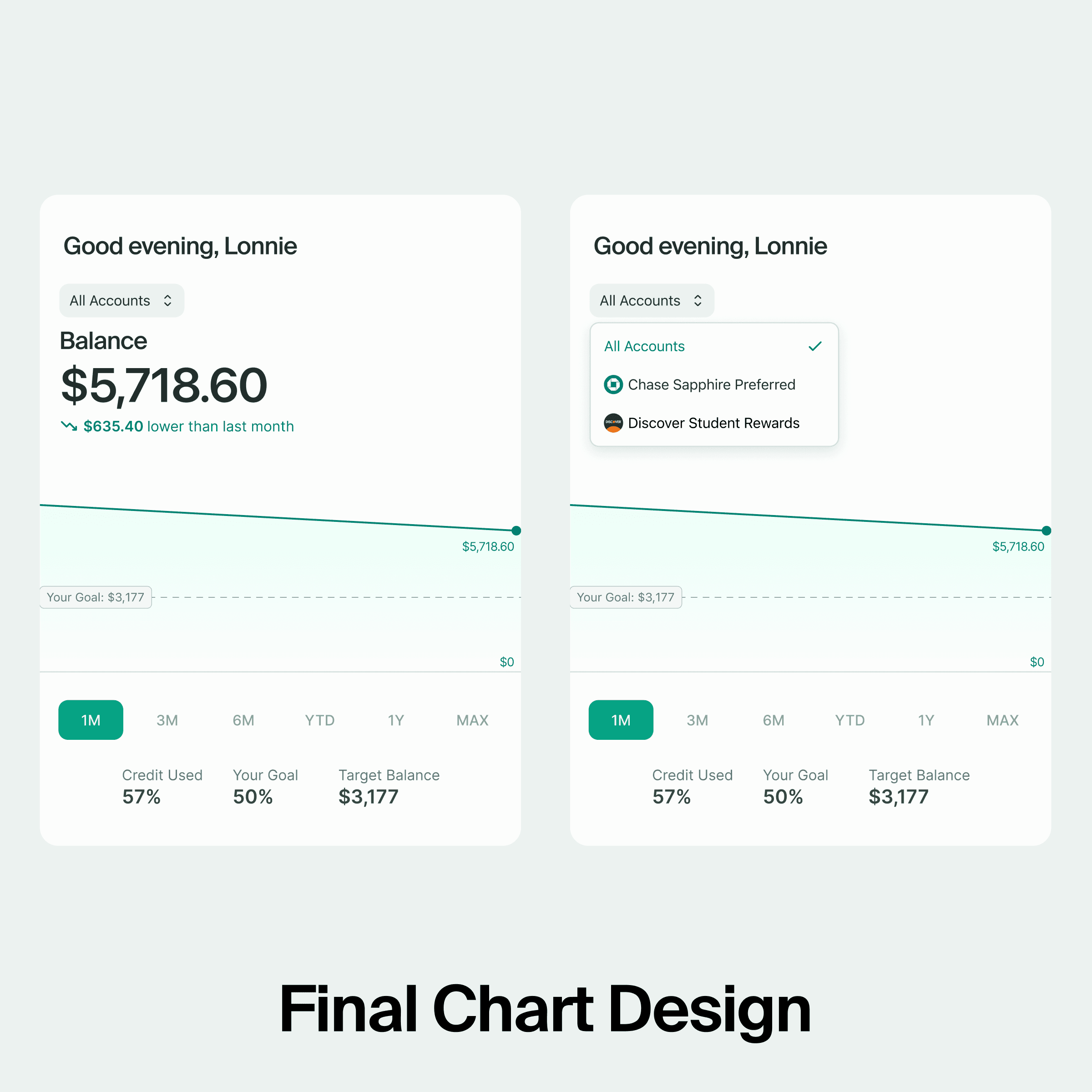
In most financial apps, a declining balance chart signals trouble because you're losing money. But in ChipAway, a declining balance is the goal. I had to flip the visual language to make users feel motivated, not alarmed, when they see their debt going down.
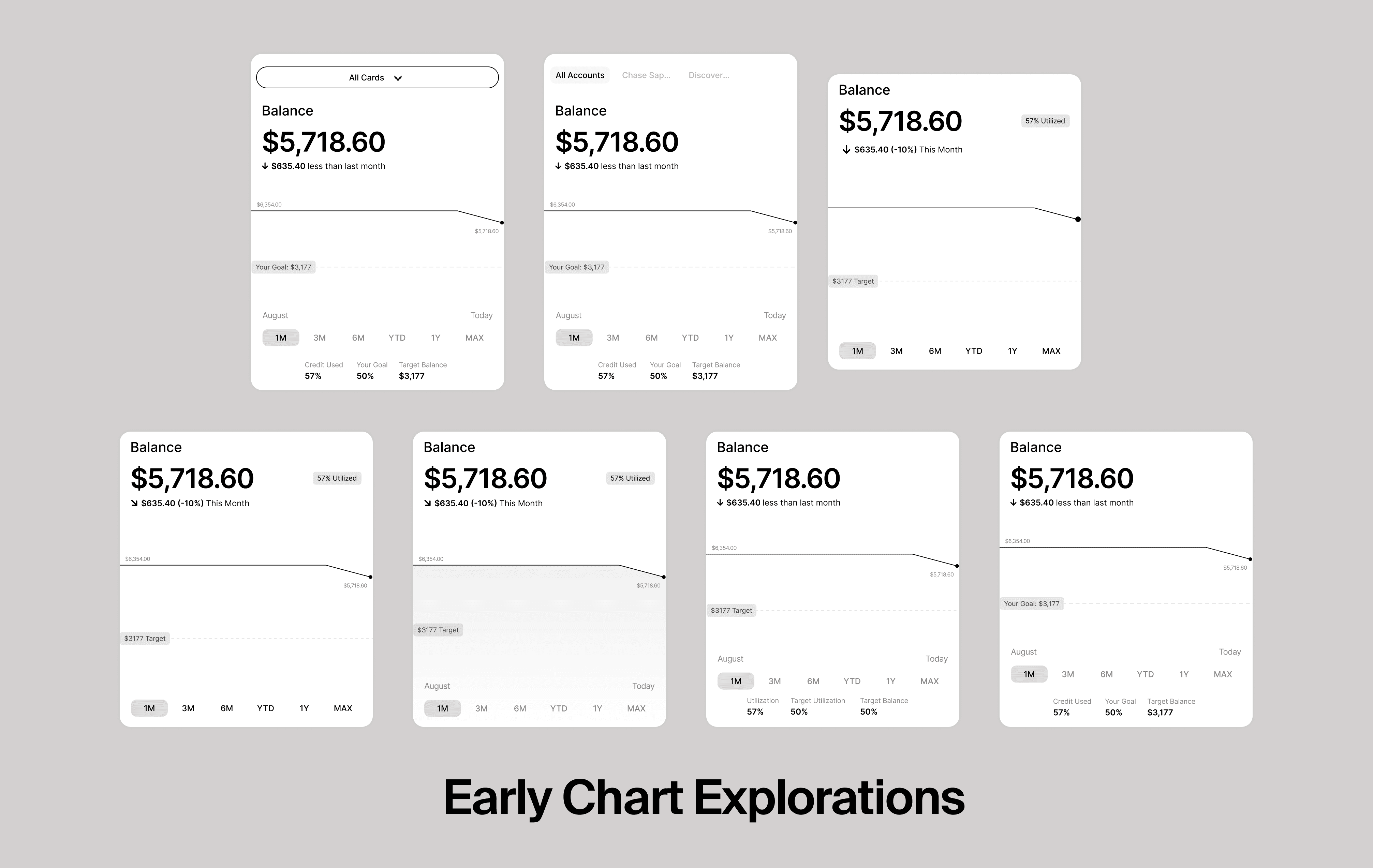
Early iterations used standard financial conventions — upward/downward arrows that could be read as positive or negative, and ambiguous language like "$635.40 less than last month." Some versions buried the good news, while others lacked clear visual celebration. Testing revealed users still felt anxious—years of seeing declining balances as "bad" had conditioned them to react negatively.
The final design uses inverted visual cues: a downward-sloping green line that clearly signals victory, a downward arrow paired with green text stating "$635.40 lower than last month," and a light green fill below the line that reinforces progress. The language is unambiguous: "lower" instead of "less," celebrating the reduction rather than neutrally stating it.
The Solution
ChipAway turns spare change from everyday purchases directly into debt payoff, making progress visible and automatic. Built on principles of transparency, control, and celebrating small wins, every feature is designed to create momentum without shame or rigid plans.
Progress You Can See and Feel
Every purchase automatically rounds up to the nearest dollar. That spare change goes straight to fighting your debt—no thinking required.
Making Every Win Feel Worth It
Celebrate wins at every stage—your first $25, dropping credit usage by 10%, paying down $1,000. Small victories that keep you motivated.
Control Without the Commitment
See every chip, adjust your plan, pause contributions when needed. Complete transparency and flexibility that adapts to your life.
Reflection
Throughout this project, I found myself carrying the emotional weight of the problem I was trying to solve. The pressure to get it right was intense. Every design decision felt heavier knowing that it could be the difference between giving up and finally feeling momentum. That weight pushed me to challenge conventions, question every assumption, and iterate until the solution felt truly motivating, not just functional.
What I Learned
This project reinforced that the best solutions come from deeply understanding emotional barriers, not just functional ones. The shift from tracking to momentum, from jargon to plain language, and from rigid plans to flexible control was about designing hope into a hopeless situation.
I also learned the power of inverting conventions. Challenging the "declining balance = bad" paradigm taught me that users carry conditioning from other experiences, and sometimes the most impactful design decision is flipping expectations entirely.
What I'd Do Differently
If I had more time, I'd explore the social dimension of debt payoff. Research hinted at the isolation and shame users feel, so what if ChipAway included optional accountability partners or anonymous progress sharing? I'd also test gamification further: Could seasonal challenges or community milestones make the journey feel even more rewarding?
Additionally, I'd invest in more robust usability testing with actual financial transactions. While the designs feel solid, validating the emotional impact of seeing real money chip away at real debt would provide invaluable insights.
Next Steps
ChipAway has strong potential as a 0→1 product. The next phase would involve building an MVP to test core assumptions: Do round-ups actually motivate users? Do milestones reduce avoidance? Does flexible control build trust? From there, expanding features like personalized coaching, credit score tracking, and financial institution partnerships could transform ChipAway from a concept into a lifeline for millions stuck in debt.